Pember Diamonds – A Member Of KUSA, Registration Number 1031350
The First 48 Hours
What to Expect When Your Puppy Arrives
A calm, practical, and technically grounded guide to settling, feeding, sleeping, and bonding during the most critical adjustment window in early canine development.
1. Why the First 48 Hours Matter More Than You Think
The first 48 hours after a puppy arrives in a new home represent a period of profound biological, behavioural, and environmental transition. While many new owners instinctively focus on training outcomes, this initial window is not about obedience, performance, or skill acquisition. It is about stabilisation.
During this period, the puppy is undergoing a complete environmental reset. Familiar sensory cues have disappeared, social bonds have been disrupted, and predictability has been replaced with uncertainty. The manner in which this transition is managed will directly influence stress regulation, feeding behaviour, sleep quality, and early attachment formation.
Put simply, this phase establishes the baseline from which all future learning emerges.
2. The Neurobiology of Transition
What Your Puppy Is Experiencing
To manage behaviour effectively, one must first understand its biological drivers. The puppy’s response to relocation is governed by activation of the hypothalamic–pituitary–adrenal (HPA) axis. This system regulates the stress response through the release of cortisol and other hormones.
Upon separation from the litter and introduction into a novel environment, cortisol levels rise. This produces heightened vigilance, increased heart rate, and behavioural changes such as vocalisation or restlessness. Importantly, this response is adaptive. It prepares the animal to assess unfamiliar surroundings. However, prolonged elevation of stress hormones can disrupt appetite, impair digestion, and fragment sleep cycles.
Your role is therefore not to eliminate stress entirely, which is impossible, but to reduce its duration and intensity through environmental control and behavioural consistency.
3. Pre-Arrival Preparation
Designing a Low-Stress Environment
Preparation is the most controllable variable in the entire process. A well-designed environment reduces uncertainty and allows the puppy to orient more quickly.
3.1 Spatial Limitation as a Stability Tool
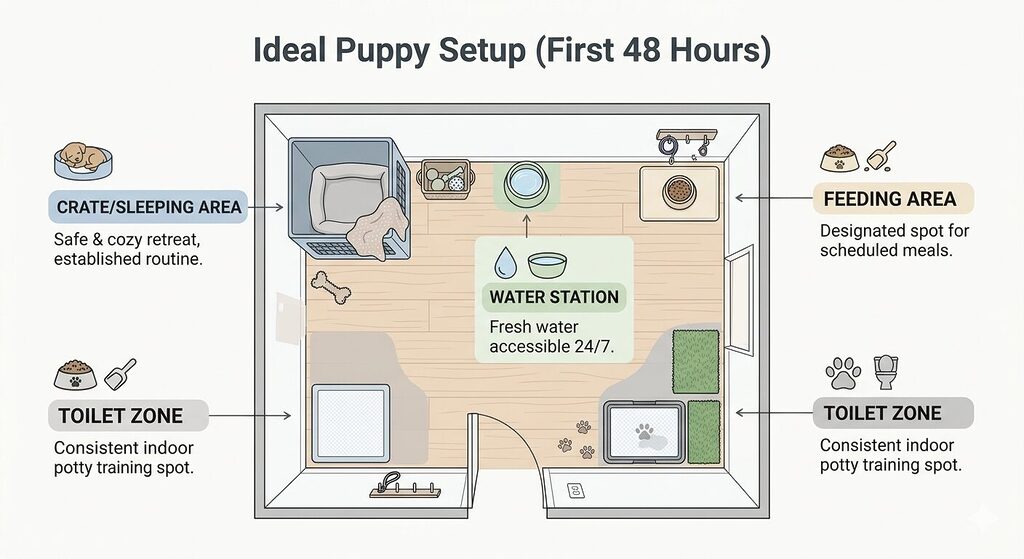
Contrary to instinct, providing a puppy with unrestricted access to a home is counterproductive. Large, undefined spaces increase cognitive load and reduce the puppy’s ability to form reliable behavioural patterns.
A confined area, whether through a crate, pen, or gated section, creates clarity. Within this space, the puppy can identify sleeping areas, water sources, and elimination zones without confusion.
This approach accelerates learning and reduces stress simultaneously.
3.2 Sensory Management
During the first 48 hours, the puppy’s sensory threshold is lowered. Sudden noises, unfamiliar smells, and excessive visual movement can trigger stress responses.
The environment should therefore be deliberately controlled:
Limit foot traffic and visitors
Reduce loud or unpredictable noises
Avoid introducing multiple new objects simultaneously
This does not delay socialisation. It establishes a stable baseline from which controlled exposure can later occur.
4. The First Hour Protocol
Controlled Entry and Orientation
The first hour after arrival sets the behavioural tone. A structured approach prevents overstimulation and confusion.
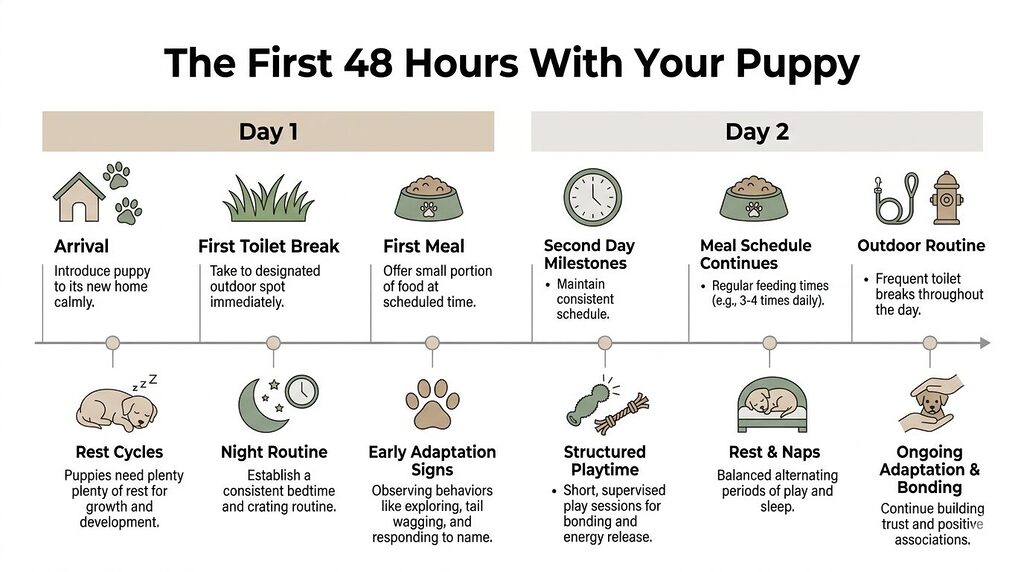
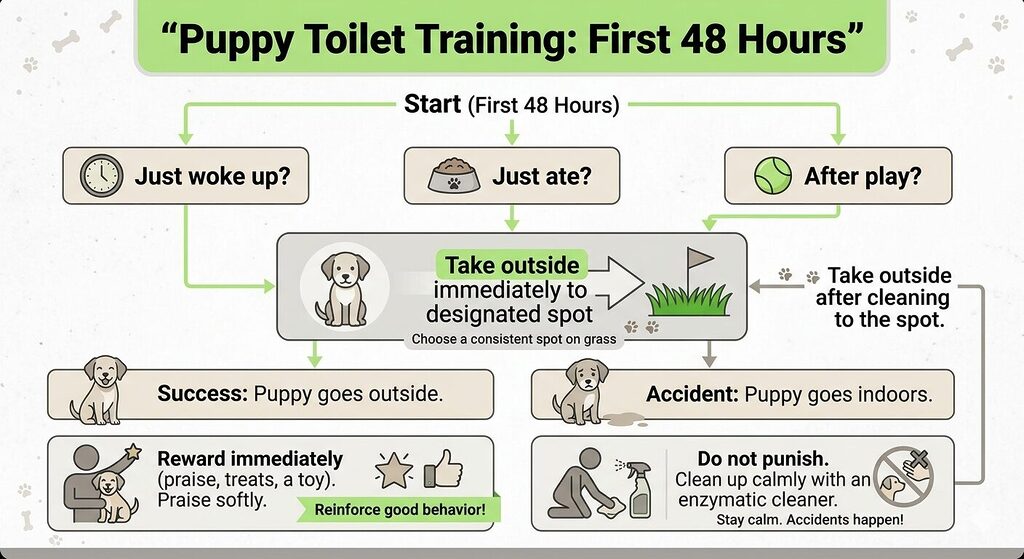
Immediately upon arrival, the puppy should be taken to the designated toilet area. This establishes the correct location from the outset, even if elimination does not occur. Entry into the home must be calm and deliberate. Avoid excitement, raised voices, or crowding. Allow the puppy to explore its confined area independently, without pressure or excessive handling. Water should be available immediately, as mild dehydration is common after transport. Food may be offered later, once the puppy shows signs of settling.
Interaction should be minimal and controlled. The objective is orientation, not engagement.
5. Feeding Strategy
Gastrointestinal Stability Over Volume
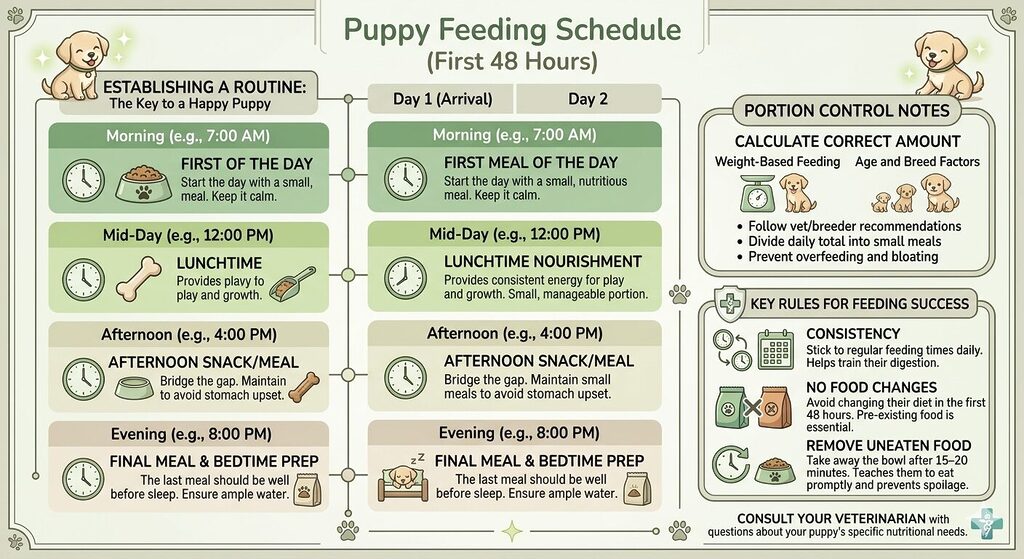
Feeding during the first 48 hours is frequently misunderstood. Owners often become concerned when a puppy does not eat normally. In reality, reduced appetite is a predictable response to stress. Maintaining dietary consistency is critical. The puppy should remain o
n the same food provided prior to collection. Sudden dietary changes can lead to gastrointestinal upset, including diarrhoea and vomiting. Meals should be offered at fixed intervals, typically three to four times per day. Uneaten food should be removed after approximately twenty minutes. This establishes routine and prevents grazing behaviour.
It is essential to avoid introducing alternative foods or treats to stimulate appetite. This creates long-term feeding issues and undermines routine formation.
6. Hydration and Electrolyte Balance in Early Adjustment
Hydration is a more immediate priority than food intake. Even mild dehydration can impact energy levels and physiological function, particularly in small breeds. Water must be available at all times. Signs of adequate hydration include moist gums, normal urination, and stable energy levels. If the puppy shows limited interest in drinking, gentle encouragement is acceptable, but force should never be applied. In most cases, normal intake resumes once stress levels decrease.
7. Sleep Architecture
Managing Fragmented Rest Cycles
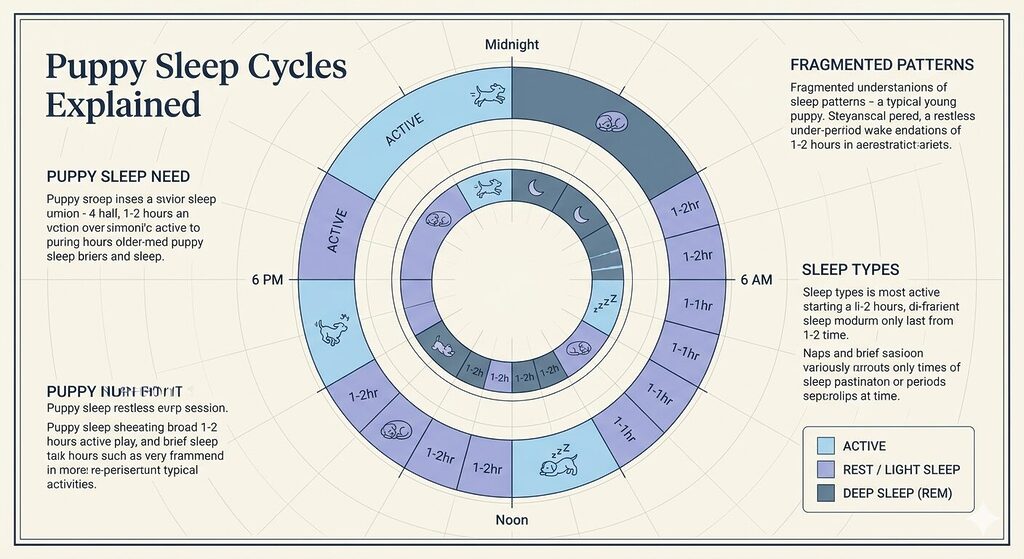
Puppies require significant amounts of sleep, often between eighteen and twenty hours per day. However, this sleep is distributed across multiple short cycles rather than consolidated into long periods. Sleep plays a critical role in neural development, memory consolidation, and emotional regulation. Disruption of sleep can lead to increased irritability, excessive biting, and reduced learning capacity. The sleeping environment should be quiet, temperature-stable, and free from unnecessary disturbance. Owners should resist the urge to wake the puppy for interaction. Rest is not inactivity; it is biological processing.
8. Night One
Separation Distress vs Learned Behaviour
The first night is often the most challenging. Vocalisation is common and should be interpreted correctly. This behaviour is not manipulation. It is a natural response to sudden separation from the litter and mother. Placing the crate near the owner’s sleeping area reduces perceived isolation and often shortens the duration of distress. When responding to vocalisation, restraint is essential. Immediate intervention reinforces dependency, while complete neglect can increase anxiety.
A balanced approach involves allowing brief self-settling attempts, followed by calm reassurance if distress escalates. Interaction should remain minimal and low-energy.
9. Toilet Training Foundations
Timing, Substrate, and Reinforcement
Toilet training begins immediately, though expectations must remain realistic. Young puppies lack full bladder control and require frequent opportunities to eliminate. Elimination is most likely after waking, eating, and periods of activity. Taking the puppy to the same location consistently establishes a clear pattern. The type of surface used for elimination should remain consistent. Changing substrates introduces confusion and delays learning. Reinforcement must be immediate. Praise or reward should occur within seconds of successful elimination. Delayed reinforcement weakens the behavioural association.
Accidents are inevitable and should be managed without punishment. Correction after the fact is ineffective and may create anxiety.
10. Behavioural Baselines
What Is Normal (and What Is Not)
Understanding normal behaviour prevents unnecessary concern. During the first 48 hours, variability is expected. Common behaviours include whining, following the owner, hesitancy in new situations, and fluctuating appetite. These are adaptive responses to environmental change. However, certain signs warrant closer attention. Persistent lethargy, refusal to drink, repeated vomiting, or prolonged diarrhoea may indicate a medical issue requiring veterinary evaluation.
Context and duration are critical in distinguishing normal adjustment from pathology.
11. Early Bite Inhibition and Sensory Exploration
Puppies explore the world through their mouths. Mouthing and gentle biting are normal developmental behaviours. Management should focus on redirection rather than suppression. Providing appropriate chew items satisfies the underlying need without reinforcing undesirable behaviour. Overstimulation and fatigue often increase biting intensity. Ensuring adequate rest reduces this behaviour significantly.
Physical punishment is counterproductive and may lead to fear-based responses.
12. Bonding Science
Attachment Without Overdependence
Bonding is frequently misunderstood as constant interaction. In reality, secure attachment is built through predictability and consistency. Structured routines provide a sense of security. Feeding, sleeping, and toileting at regular intervals create an environment the puppy can understand. Excessive attention can lead to dependency and separation issues later. Short periods of controlled independence are beneficial, even during the first 48 hours.
Calm, measured interaction is more effective than high-energy engagement.
13. Stress Signals and Cortisol Regulation
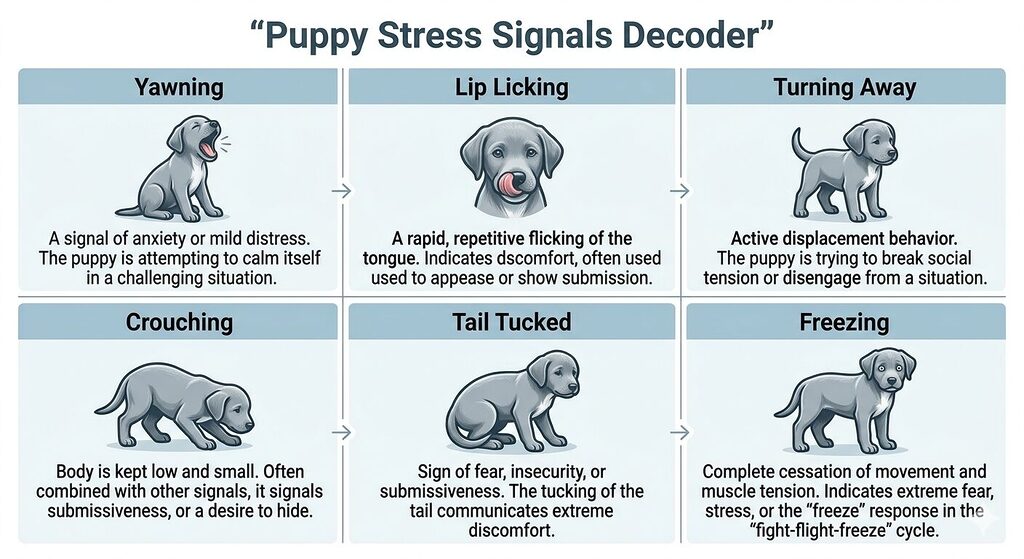
Early stress signals are subtle but highly informative. Recognising them allows for timely intervention before escalation. Common indicators include lip licking, yawning unrelated to fatigue, avoidance behaviour, and sudden stillness. When these signals appear, the appropriate response is to reduce environmental pressure. This may involve decreasing stimulation, increasing distance from stressors, or allowing the puppy to rest.
Effective stress management during this phase improves long-term resilience.
14. Human Psychology
Managing Expectation Shock
The adjustment process is not limited to the puppy. Owners often experience a sudden shift in routine, responsibility, and emotional state. Sleep disruption, uncertainty, and perceived performance pressure can lead to anxiety or doubt. This response is common and should not be misinterpreted as failure. Focusing on process rather than outcome is essential. The objective is not immediate success but gradual stabilisation.
Clarity and structure reduce stress for both the puppy and the owner.
15. Health Monitoring Protocols
Clinical Red Flags
Continuous observation during the first 48 hours allows for early detection of potential health issues. Key parameters include hydration, energy levels, and stool consistency. Minor fluctuations are normal, but persistent abnormalities require attention. Veterinary consultation is recommended if the puppy exhibits repeated vomiting, prolonged diarrhoea, extreme lethargy, or refusal to drink.
Early intervention significantly improves outcomes and prevents complications.
16. Controlled Social Exposure
People, Pets, and Environment
Socialisation is important, but timing and intensity must be managed carefully. Immediate exposure to multiple people, animals, and environments can overwhelm the puppy. Initial interactions should be limited to core household members. Introductions to other pets should be controlled, brief, and supervised. Environmental expansion should occur gradually, once the puppy demonstrates signs of stability.
This approach ensures positive associations rather than stress-driven reactions.
17. Day Two Adjustments
Early Indicators of Adaptation
By the second day, subtle behavioural changes often emerge. The puppy may begin to explore more confidently, show increased interest in food, and vocalise less frequently. These changes indicate that the stress response is diminishing and adaptation is underway.
It is important not to accelerate expectations at this stage. Stability should be maintained rather than replaced with new demands.
18. Sample 48-Hour Operational Schedule
A structured schedule provides predictability and reduces uncertainty. While exact timing may vary, consistency is essential. Morning typically includes waking, toileting, feeding, and a short interaction period followed by rest. Midday and afternoon cycles repeat similar patterns of elimination, feeding, and rest. Evening routines should become progressively calmer, leading into a structured settling process at night.
The schedule should remain flexible but consistent in sequence.
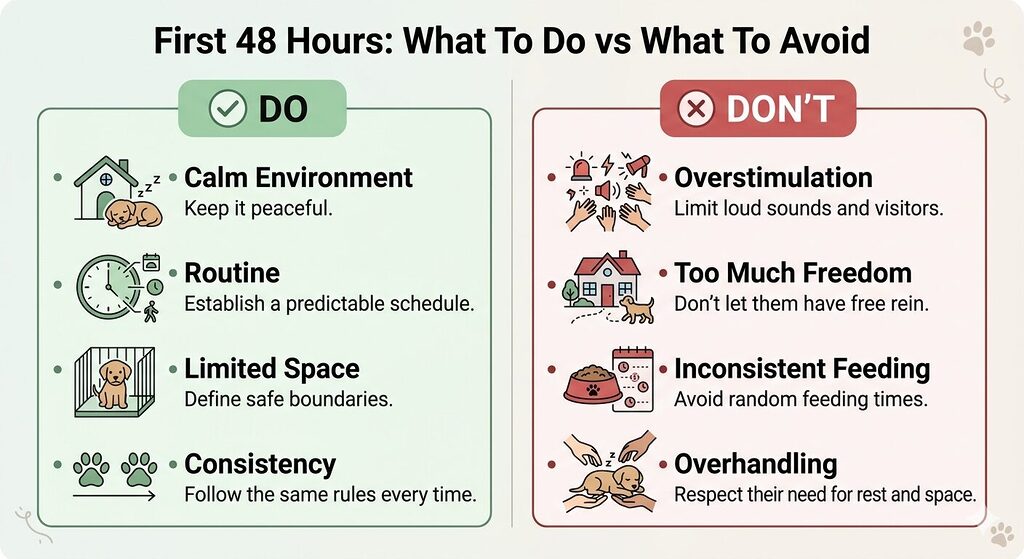
19. High-Risk Mistakes That Undermine Stability
Several common mistakes can significantly delay adjustment. These include;-
providing excessive freedom,
overstimulation through play or handling,
inconsistent feeding schedules,
and unrealistic expectations.
Each of these increases stress and reduces the puppy’s ability to form reliable patterns. Avoiding these errors is often more impactful than implementing advanced training techniques.
20. Internal Training Roadmap
What Comes After 48 Hours
The first 48 hours represent a stabilisation phase, not a training phase. Once the puppy has adjusted, structured training can begin. This includes crate training, formal toilet routines, basic obedience, and gradual socialisation. Progression should be incremental and aligned with the puppy’s developmental stage.
Establishing a strong foundation during the transition phase makes all subsequent training more efficient and effective.
21. Conclusion
Stability Before Training
The first 48 hours define the emotional baseline of the puppy’s new environment. Training success is built upon this foundation.
A calm, predictable, and controlled environment allows the puppy to transition with minimal stress. Once stability is achieved, learning follows naturally.
In practical terms, doing less—but doing it consistently—produces better long-term outcomes.
The objective is not perfection. It is stability. Everything else develops from there.
1. Is it normal for my puppy not to eat on the first day?
Yes. A reduced appetite during the first 24 hours is a common stress response. As long as the puppy is drinking water and shows gradual interest in food, this is not typically a concern.
2. How much should my puppy sleep in the first two days?
Puppies may sleep between 18 and 20 hours per day. Sleep is often fragmented, and frequent naps are normal and necessary for development.
3. Should I wake my puppy up to play or interact?
No. Sleep is critical for neurological development. Interrupting rest can lead to irritability and behavioural issues.
4. What should I do if my puppy cries at night?
Allow brief self-settling attempts first. If distress escalates, provide calm reassurance without stimulating interaction. Avoid reinforcing dependency through excessive attention.
5. How often should I take my puppy out to toilet?
Typically every 1–2 hours, as well as after waking, eating, and playing. Frequent opportunities prevent accidents and accelerate learning.
6. Can I change my puppy’s food immediately?
No. Maintain the same diet for at least 5–7 days. Sudden changes can cause gastrointestinal upset.
7. When should I start training my puppy?
Formal training should begin after the initial adjustment period. The first 48 hours should focus on stability, not instruction.
8. Is it okay to let my puppy explore the whole house?
No. Limiting space initially reduces stress and helps establish clear behavioural patterns.
9. Why is my puppy biting so much?
Mouthing is a natural exploratory behaviour. It often increases with fatigue or overstimulation. Redirection is the appropriate response.
10. Should I introduce my puppy to visitors immediately?
No. Limit exposure during the first 48 hours. Gradual socialisation is more effective than immediate immersion.
11. What are signs that my puppy is stressed?
Common signs include whining, lip licking, yawning (without fatigue), avoidance, and restlessness. These indicate the need to reduce stimulation.
12. How do I know if my puppy is dehydrated?
Signs include dry gums, lethargy, and reduced urination. If suspected, encourage water intake and consult a veterinarian if symptoms persist.
13. Is it normal for my puppy to follow me everywhere?
Yes. This is a natural attachment behaviour. However, short periods of independence should be introduced early to prevent dependency.
14. What should I do about accidents indoors?
Clean thoroughly without punishment. Focus on prevention through supervision and frequent toilet breaks.
15. When should I contact a veterinarian?
If the puppy shows persistent vomiting, diarrhoea lasting more than 24 hours, extreme lethargy, or refusal to drink water.
Expert Opinion
A Behavioural Perspective on Early Transition
"From a behavioural standpoint, the first 48 hours should be understood not as a training opportunity, but as a regulatory phase. The puppy’s nervous system is actively attempting to recalibrate in response to a complete environmental shift. During this time, the primary objective is not to impose structure in the traditional sense of obedience, but to create conditions under which the animal can achieve physiological equilibrium. When this equilibrium is disrupted—through overstimulation, inconsistent handling, or premature training demands—the consequences often manifest later as anxiety, poor impulse control, or resistance to learning.
In practice, the most successful transitions are characterised by restraint rather than intervention. Owners who allow the puppy to decompress, while maintaining predictable routines and controlled exposure, tend to produce more stable behavioural outcomes. This approach may appear passive, but it is highly strategic. It recognises that learning efficiency is directly tied to emotional state. A calm, regulated puppy is not only easier to manage in the moment, but significantly more receptive to structured training in the weeks that follow. In this sense, the first 48 hours are less about visible progress and more about invisible alignment."