
History
The Pembroke Welsh Corgi
A Breed History — From Welsh Farmlands to the World Stage
Origins and Ancient Roots
The Pembroke Welsh Corgi is one of the oldest and most storied herding breeds in the British Isles, with roots reaching back well over a thousand years. One of two recognised Welsh Corgi breeds — the other being the Cardigan Welsh Corgi, a distinctly separate breed with its own ancient lineage — the Pembroke takes its name from Pembrokeshire in south-west Wales, the county most closely associated with its development.
The precise origins of the breed remain a subject of spirited debate among historians and fanciers. The most widely cited theory holds that the ancestors of the Pembroke were brought to Wales by Flemish weavers who settled in Pembrokeshire in the early 12th century, around 1107, at the invitation of King Henry I. These settlers are believed to have brought with them a type of spitz-like dog related to the Schipperke and the Pomeranian, which subsequently crossbred with native Welsh dogs. An older and more romantic tradition, popular among breed enthusiasts, holds that the Corgi was the preferred mount of woodland fairies — and that the breed's characteristic "fairy saddle" marking across the shoulders is evidence of this mythical heritage.
Whatever the true ancestry, by the Middle Ages the Pembroke Welsh Corgi had established itself as a highly capable working dog on the farms and smallholdings of Wales. Classified as a heeler, the Corgi worked cattle by darting low to nip at their heels and then dropping flat to avoid the retaliatory kick — a technique perfectly suited to its compact, low-slung build. They also served as general farm dogs, keeping vermin at bay and alerting their owners to strangers.
The Development of the Breed Standard
For much of their history, Pembroke Welsh Corgis were bred purely for working ability, with little concern for consistency of type. By the early 20th century, however, the breed's numbers had declined significantly as mechanised farming reduced the need for cattle dogs, and the Pembroke faced a real risk of disappearing altogether.
A revival came through the efforts of dedicated breed enthusiasts who sought formal recognition for the Corgi. In 1925, the Pembroke and Cardigan were officially recognised together by The Kennel Club in the United Kingdom under the single designation "Welsh Corgi." For a time the two breeds were shown together and even interbred, but fanciers of each type lobbied hard for separation. In 1934, The Kennel Club formally recognised the Pembroke and the Cardigan as two distinct breeds, a decision that allowed each to develop along its own lines and which stands to this day.
The breed standard that emerged called for a sturdy, active dog standing 10 to 12 inches at the shoulder and weighing between 22 and 31 pounds. The coat should be of medium length, dense, and weather-resistant, appearing in red, sable, fawn, or black and tan, typically with white markings. Of equal importance to conformation is temperament: the standard calls for a bold, outgoing, and workmanlike character — intelligent, alert, and responsive, yet never aggressive or nervous. The Pembroke is notably distinguished from the Cardigan by its naturally short or docked tail, its more pointed ears, and its generally lighter, foxier appearance.
The Welsh Corgi League
The formation of a dedicated breed club was the natural next step following the Pembroke's separation from the Cardigan, and in 1938 the Welsh Corgi League was established in the United Kingdom. Founded just four years after the Kennel Club's historic separation of the two breeds, the League was created expressly to safeguard and promote the Pembroke Welsh Corgi — a mission it continues to fulfil to this day, both within the UK and for enthusiasts across the world.

Today the Welsh Corgi League remains the principal breed club for the Pembroke in the United Kingdom. It maintains the breed's health survey programme in partnership with the Kennel Club, stages championship and open shows, publishes the League Handbook — which has historically included a section dedicated to Pembrokes in America, reflecting its international outlook — and operates a rescue network for Pembrokes in need of rehoming. For serious fanciers and newcomers alike, the League is the central reference point for all matters relating to the breed in Britain, and its archives constitute an irreplaceable record of the Pembroke's modern history.
The Royal Connection
Queen Elizabeth II and Her Corgis
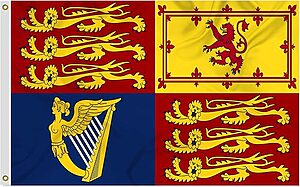 No chapter in the Pembroke Welsh Corgi's history is more celebrated — or more responsible for the breed's global recognition — than its decades-long association with Queen Elizabeth II. The connection began in 1933 when King George VI acquired a Pembroke named Dookie for the Royal Family, and the young Princess Elizabeth immediately formed a deep attachment to the breed. In 1944, on her eighteenth birthday, she received her own Corgi, Susan, and it is from Susan that many of the Queen's subsequent Corgis were descended.
Over the course of her reign, Queen Elizabeth II owned more than thirty Pembroke Welsh Corgis, and the sight of them trotting at her heels — through Buckingham Palace, Windsor Castle, and Balmoral — became one of the defining images of the modern monarchy. Her Corgis accompanied her on official engagements, appeared in countless photographs and portraits, and featured memorably alongside the Queen in the short film produced for the opening ceremony of the 2012 London Olympic Games.
Queen Elizabeth II passed away on 8 September 2022 at Balmoral Castle, Scotland, at the age of 96. Her love for the Pembroke Welsh Corgi endured until the end: in the final years of her life she acquired two new Corgis, Sandy and Muick, gifted to her by Prince Andrew and his daughters. The dogs were present at Windsor in the days following her death and accompanied her coffin during the lying-in-state, a poignant final tribute. The Queen's patronage elevated the Pembroke Welsh Corgi from a regional working breed to a globally recognised symbol of British heritage, and her influence on the breed's worldwide popularity is impossible to overstate.
The Pembroke Welsh Corgi Today
In the decades following the Second World War, the Pembroke Welsh Corgi enjoyed a sustained period of extraordinary popularity in the United Kingdom, regularly topping breed registration charts during the 1950s and 1960s. Interest eventually settled to more modest levels, and by 2009 the Kennel Club placed the Pembroke on its list of Vulnerable Native Breeds when annual registrations in the UK fell below 300 — a sobering moment for a breed so intrinsically tied to British cultural identity.
That decline has since been arrested, in no small part due to a surge of international interest driven by social media and popular culture. The breed's photogenic qualities and characterful personality made it ideally suited to the age of the internet, and Pembroke Welsh Corgis have amassed enormous followings across platforms worldwide. The American Kennel Club has consistently ranked the Pembroke among the top twenty most popular breeds in the United States in recent years.
Responsible breeders today place great emphasis on health testing and temperament. Known health concerns in the breed include hip dysplasia, degenerative myelopathy — a progressive neurological condition for which a DNA test is now available — and certain eye conditions. Reputable breeders routinely screen for these conditions and are open about health records. The breed's strong herding instinct remains very much present, which can manifest as a tendency to nip at heels or attempt to herd children and other pets; prospective owners should be aware of this trait and prepared to channel it through consistent training and enrichment.
The Pembroke Welsh Corgi is an active, intelligent breed that thrives with regular exercise, mental stimulation, and close involvement in family life. Despite their small stature, they are robust dogs with considerable stamina, equally at home on a farm or in a well-exercised urban household.
The Pembroke Welsh Corgi in South Africa

The breed is wi dely believed to have arrived with British settlers and colonial administrators, and it found a receptive audience among the farming and dog-showing communities of the time. The Corgi's adaptability, hardiness, and willing temperament made it well-suited to the varied conditions of Southern Africa.
Early Foundations
In the early years, Pembrokes were imported directly from established British kennels, and the South African fancy worked hard to maintain the quality of the breed. The show scene developed steadily through the mid-20th century, with dedicated fanciers beginning to produce dogs of genuine international calibre.
Influential Breeders and Kennels
Several names stand out as particularly significant in the development of the South African Pembroke Welsh Corgi, spanning from the mid-twentieth century to the present day.
Joy Osborn began breeding Corgis in the 1950s under the kennel prefix "Corgi Castle," and over the following decades established a reputation for producing dogs of outstanding type and temperament. Her influence on the breed in South Africa was formative, and the bloodlines she developed continued to shape local breeding programmes for a generation.
Pamela Hunter's "Stonewall" kennel, established in the 1960s, became another benchmark of quality within the South African fancy. Hunter was renowned for her meticulous approach to breeding and her thorough understanding of the breed standard. Stonewall produced numerous champions and contributed significantly to the gene pool available to South African breeders, helping to maintain the vigour and correctness of type that distinguished the local population.
Among the most distinctive kennel histories in South African Corgi breeding is that of Hazelmere, whose origins stretch across three continents and span more than seven decades. The kennel name itself derives from the village of Hazlemere in Oxfordshire, England, where Kay Roos' mother convalesced in the late 1940s following a severe illness contracted in Kenya. So profound was her attachment to that restorative place that upon returning to Kenya she formally registered the Hazelmere kennel in 1946, initially breeding German Shepherds before transitioning to Pembroke Welsh Corgis. Her first breeding Corgis were acquired from Mrs. Powrie in Nairobi, who had imported them directly from the United Kingdom — ensuring that Hazelmere's founding stock carried an authentic British lineage from the outset. When the family subsequently relocated to South Africa, the kennel and its legacy came with them.
The kennel is today steered by Kay Roos, who has developed Hazelmere into one of the most scientifically rigorous breeding programmes in South Africa. Drawing on an extensive knowledge of canine genetics and conformation, Roos integrates advanced genomic screening and reproductive techniques into every breeding decision, selecting not only for physical type but for temperament, behaviour, and heritable health. Hazelmere's current breeding stock reflects an emphatically international outlook, incorporating bloodlines from the United Kingdom, the United States, Hungary, and Russia — each animal subject to thorough health screening and conformation assessment before being introduced to the programme. This commitment to genetic diversity, combined with an unflinching ethical standard and a deep intolerance for irresponsible breeding practices, has seen Hazelmere Corgis claim titles in both local and international competition. The kennel stands as a compelling example of how South African breeding, rooted in a rich personal and historical narrative, continues to engage meaningfully with the best of the global Pembroke Welsh Corgi fancy.
The Breed in South Africa Today
The Pembroke Welsh Corgi remains a well-regarded breed in South Africa, with an active community of breeders and owners affiliated with the Kennel Union of Southern Africa (KUSA). As in other countries, South African breeders have embraced the international conversation around health testing and responsible breeding practices, and the welfare of the breed is taken seriously by the community.
The global rise in the Corgi's popularity has been felt in South Africa as much as anywhere, with social media bringing new enthusiasts to the breed. Responsible breeders continue to stress the importance of understanding the Pembroke's working heritage and active nature before committing to ownership — a dog with this much intelligence and energy is a long-term commitment that rewards equally engaged owners.
Conclusion
From the windswept farms of Pembrokeshire to the corridors of Buckingham Palace, and from the show rings of Britain to the homesteads of South Africa, the Pembroke Welsh Corgi has demonstrated a remarkable capacity to excel wherever it has been given the opportunity. It is a breed forged by centuries of working partnership with people, defined by intelligence, loyalty, and an irrepressible spirit that has made it one of the most beloved dogs in the world.
Understanding that heritage — the working instinct, the need for engagement, the bond of trust between dog and handler — is the foundation of responsible ownership. The Pembroke Welsh Corgi is not merely a charming face or a cultural icon; it is a living working breed with real needs, and it richly repays those who take the time to understand and honour what it is.