A Comprehensive Breeder’s Guide to Responsible Management, Health Optimization, and Breeding Decisions
As responsible Pembroke Welsh Corgi breeders in South Africa, part of the Pember Diamonds and Corgi Crew ecosystem, we understand that the first heat cycle (estrus) in a female Corgi represents a critical developmental milestone. This event signals the onset of sexual maturity and carries significant implications for long-term health, temperament, structural development, and breeding program success.
Quick Answer
Female Pembroke Welsh Corgis typically experience their first heat cycle (estrus) between 6 and 12 months of age, with many entering around 7–9 months. The cycle lasts 2–4 weeks and includes four phases: proestrus (bleeding/swelling), estrus (fertile period), diestrus, and anestrus. Key management focuses on hygiene, preventing unwanted pregnancies, monitoring health risks (especially pyometra and spinal stress due to the breed’s build), and waiting until the bitch is at least 24 months old with full health clearances before considering breeding. Responsible breeders prioritize the bitch’s full physical maturity to protect against orthopedic issues common in Corgis, such as IVDD and hip dysplasia. Always consult a veterinarian for individualized advice.
Pembroke Welsh Corgis, with their distinctive short legs, sturdy build, and herding heritage, typically experience their first heat between 6 and 12 months of age, though variations are common due to genetics, nutrition, environment, and individual growth rates. Unlike larger breeds that may delay until 18–24 months, small-to-medium breeds like Corgis often cycle earlier.
This extensive guide draws from veterinary science, experienced breeding practices (including KUSA standards in South Africa), and real-world observations within ethical programs. It covers biology, detection, management, risks, breeding timing, and best practices. Whether you are a new breeder evaluating your first litter prospect or an established kennel refining protocols, this resource aims to support informed, ethical decisions that prioritize bitch welfare and puppy quality.
Proper handling of the first heat cycle directly influences
Skeletal and joint development (critical for a breed prone to back and hip issues).
Mammary and reproductive health.
Genetic legacy through informed breeding choices.
Owner education and puppy placement success.
By the end of this article, you will have actionable frameworks, checklists, and decision trees tailored to Corgis.
Understanding the Canine Estrous Cycle in Corgis
The estrous cycle, commonly referred to as a “heat cycle,” is the natural reproductive cycle of female dogs. Unlike humans, who experience a menstrual cycle, dogs have an estrous cycle during which they are only fertile and receptive during a specific window. This cycle is divided into four distinct phases: Proestrus, Estrus, Diestrus, and Anestrus. Understanding these phases in detail is essential for responsible Pembroke Welsh Corgi breeders, as proper management during the first cycle lays the foundation for the bitch’s long-term health and future breeding success.
Proestrus
(Average 7–10 days, range 3–17 days)
This is the initial phase of the heat cycle, driven by a sharp rise in estrogen levels produced by the developing ovarian follicles. The most visible signs are vulvar swelling and a bloody vaginal discharge. The discharge starts as dark red and may gradually lighten. In Pembroke Welsh Corgis, with their thick double coats and low-to-the-ground build, discharge can be less obvious initially and is often first noticed on light-colored bedding or during grooming.
Behaviorally, the bitch becomes restless, may urinate more frequently to spread scent, and shows increased licking of the vulva. She attracts males but is typically unreceptive and may become snappy or avoid them. Some Corgis exhibit subtle early signs such as mild clinginess or changes in appetite before overt physical symptoms appear. First cycles are often lighter and shorter than subsequent ones.
Estrus
(Average 7–9 days)
Commonly called “standing heat,” this is the fertile phase. Estrogen levels begin to decline while progesterone starts to rise following ovulation. The vaginal discharge usually changes to a lighter pink or straw-colored, and the vulva remains swollen but softer. Ovulation typically occurs 2–3 days after the start of estrus, with eggs remaining viable for 2–4 days.
This is when the bitch becomes receptive, often “flagging” her tail to one side and standing for mating. In Corgis, hormonal fluctuations can noticeably amplify breed-typical behaviors — increased herding drive, heightened food motivation, or more intense scent-tracking instincts. Many owners report their normally calm Corgi becoming more vocal or excitable during this window.
Diestrus
(60–90 days)
Progesterone levels dominate throughout this phase, whether the bitch is pregnant or not. The body prepares for pregnancy, with the uterine lining thickening. This is a critical period for health monitoring because the risk of pyometra (a potentially life-threatening uterine infection) peaks in intact females. False pregnancies (pseudocyesis) are relatively common in Corgis and may include mammary gland development, nesting behavior, and even milk production.
Anestrus
(3–8 months or longer)
This is the resting phase between cycles. Hormone levels are low, and the reproductive system recovers. In Pembroke Welsh Corgis, the average interval between cycles is every 6–8 months, though some bitches cycle as frequently as every 5 months or as infrequently as every 10–12 months.
Corgi-Specific Factors Influencing the Cycle
Smaller body size generally leads to earlier onset of puberty.
Well-nourished Pembroke lines often experience their first heat between 6–9 months, while slower-maturing individuals or runts may not cycle until 12–14 months. Genetics play a major role. Tracking lineage patterns within your breeding program is crucial — some families consistently cycle earlier or more regularly. Environmental influences in South Africa, such as warmer subtropical climates, longer daylight hours in summer, and seasonal nutrition changes, can subtly shift cycle timing or intensity.
Coat and conformation
The Corgi’s dense coat can mask early swelling, while their long back and short legs make them more susceptible to stress on the spine during hormonal weight fluctuations or behavioral changes.
Hormonal surges during the first heat have significant effects on a developing skeleton. Estrogen influences growth plate closure, meaning premature breeding (before full physical maturity at 18–24 months) can compromise bone density, increase the risk of hip dysplasia, and heighten susceptibility to intervertebral disc disease (IVDD) — conditions already prevalent in the breed due to their chondrodysplastic structure.
For breeders, the first heat cycle provides invaluable data. Detailed record-keeping of dates, signs, duration, and behavior helps predict future cycles, plan health testing timelines, and make informed decisions about when a particular bitch is truly ready for breeding.
Signs of First Heat – What to Look For and Record
Early and accurate detection of the first heat cycle is one of the most important skills for any responsible Pembroke Welsh Corgi breeder. Identifying the onset promptly helps prevent accidental pregnancies, allows for timely hygiene management, and provides critical baseline data for the bitch’s future reproductive health. First heat cycles are often less predictable and milder than subsequent ones, making careful observation essential.
Physical Signs
The most reliable physical indicators appear during the proestrus phase:
Vulvar swelling
This is usually the first noticeable change. In first cycles, swelling may be mild or subtle compared to later heats. The vulva becomes enlarged, puffy, and may appear darker pink or reddish.
Vaginal discharge
Starts as bloody or dark red spotting and can range from very light (sometimes barely visible) to moderate flow. In Corgis, because of their low build and thick coat, discharge is frequently first noticed as stains on bedding, around the tail area, or during cleaning rather than as heavy bleeding.
Increased urination and marking
The bitch may urinate more frequently, often in small amounts, to spread pheromones. This behavior is driven by rising estrogen levels.
Appetite fluctuations
Some females become hungrier due to hormonal changes, while others temporarily lose interest in food. Monitor weight closely, as Corgis are prone to rapid weight gain that can stress their spine.
Behavioral Signs
Hormonal shifts often cause noticeable personality changes:
Restlessness or clinginess
The bitch may pace, pant, or follow her owner more than usual. Some become anxious when left alone.
Increased affection or irritability
Mood swings are common — a normally affectionate Corgi may become overly cuddly, while others show grumpiness or snappiness, especially toward intact males.
Mounting or presenting
She may mount other dogs (male or female) or present her hindquarters. This behavior peaks during the transition from proestrus to estrus.
Tail flagging
A classic sign of standing heat where the bitch holds her tail to the side when approached by a male.
Subtle Corgi-Specific Indicators
Pembroke Welsh Corgis often display breed-typical behaviors that become amplified during their first heat:
Heightened herding drive — increased chasing, nipping, or circling of people, other pets, or even objects.
More intense vocalization - (barking, whining, or “talking”).
Stronger interest in scents outdoors — stopping frequently to sniff, tracking invisible trails, or becoming fixated on areas where other dogs have been.
Changes in energy levels — some Corgis become more playful and bouncy, while others appear lethargic.
Because first cycles can be “silent” or very subtle in some lines, these behavioral shifts are often the earliest clues.
Recommended Monitoring Tools and Best Practices
Perform daily vulva checks (gently, with clean hands) and take clear, dated photographs for comparison.
Use a dedicated cycle tracking spreadsheet or app. Record the date signs began, discharge color and amount, behavior notes, appetite, and any other observations.
For serious breeders, vaginal cytology (microscopic examination of vaginal cells) or serial **progesterone blood testing** provides scientific precision, especially useful for predicting ovulation in valuable breeding females.
Consider keeping a separate Heat Journal for each bitch to identify patterns across cycles.
First heats are frequently irregular — they may be shorter (as little as 10–14 days total), lighter in discharge, or present as “split heats” (signs appear then disappear briefly before returning). Establishing detailed individual records from the very first cycle helps you predict future patterns and make better breeding decisions.
Thorough monitoring during this phase not only protects the current bitch but also demonstrates your commitment to responsible breeding practices, which strengthens trust with puppy buyers and aligns with the educational goals of the Corgi Crew Knowledge Network.
Management and Care During the First Heat Cycle
Effective management during a female Pembroke Welsh Corgi’s first heat cycle is crucial for her comfort, safety, and long-term health. Because first heats can be unpredictable and Corgis’ low build and thick coats present unique challenges, a proactive, structured approach helps minimize stress and prevent complications.
Maintaining excellent hygiene is the foundation of care during heat.
Dog diapers or washable heat pants are highly recommended. Corgis’ short legs and low center of gravity make these garments practical and effective at catching discharge. Choose breathable, adjustable designs and check frequently for leaks or skin irritation. Rotate between several pairs to allow washing and drying.
Frequent bedding changes — replace bedding at least once daily, or more often if heavy discharge is present. Use washable, absorbent mats or puppy pads in her resting area.
Gentle cleaning — Use pet-safe, fragrance-free wipes or a warm damp cloth to gently clean the vulva area. Avoid harsh chemicals or excessive scrubbing, which can cause irritation. Some breeders apply a thin layer of veterinary-approved barrier cream to prevent chafing.
Preventing Unwanted Pregnancy
Accidental mating is a major concern, especially since scent can attract intact males from significant distances.
- Maintain strict separation from all intact males. Even brief supervised contact can result in pregnancy. Note that Beagle owners in our ecosystem report similar strong scent-driven challenges.
- Reinforce crate training and limit outdoor time to leashed, supervised walks only. Avoid dog parks or areas frequented by other dogs.
- Consider temporary boarding at a reputable facility or using secure, covered runs if you have multiple dogs. Some breeders temporarily relocate the bitch to a quiet, male-free area of the property.
Hormonal changes can significantly affect appetite and metabolism.
Stick to a high-quality, balanced diet formulated for small-to-medium breeds. If appetite increases, provide a slight calorie bump (5–10%) through added protein or healthy fats, but carefully monitor weight. Corgis are genetically prone to obesity, and excess weight during hormonal shifts can stress the spine and joints.
Consider targeted supplements after consulting your veterinarian: omega-3 fatty acids for skin and coat health, glucosamine and chondroitin for joint support (especially important for a developing Corgi skeleton), and prenatal vitamins if you plan future breeding. Always ensure proper calcium-phosphorus balance.
Recommended Containment and Enrichment Setup for Managing a Corgi in Heat – Breeder Best Practices
Exercise and Enrichment
Balance is key — too little activity leads to restlessness; too much can cause exhaustion.
Provide moderate daily exercise through short, calm leash walks. Avoid intense play or long hikes during peak heat.
Focus heavily on mental stimulation. Puzzle toys, lick mats, scent games (using safe, hidden treats), and interactive feeders help channel hormonal energy and reduce anxiety. Many Corgis become more food-motivated during heat, making these tools particularly effective.
Health Monitoring
Vigilant observation can catch problems early.
Watch for red flags such as lethargy, foul-smelling discharge, excessive thirst/urination, vomiting, or loss of appetite — these may indicate pyometra or other infections.
Schedule a routine vet check if anything seems abnormal, especially during the first heat when baseline patterns are still being established.
South Africa-Specific Considerations
South Africa’s warm and often humid climate increases the risk of bacterial infections and skin issues during heat. Ensure excellent ventilation in her area, use fans if needed, and maintain rigorous hygiene. During summer months, schedule outdoor time for cooler parts of the day and watch for heat stress combined with hormonal changes.
Consistent, attentive care during the first heat not only keeps your bitch comfortable but also builds valuable knowledge for future cycles and demonstrates your commitment to responsible breeding.
Health Risks and Veterinary Considerations
While the first heat cycle is a natural process, it introduces several health considerations that responsible Pembroke Welsh Corgi breeders must understand and manage proactively.
Health Risks After First Heat in Pembroke Welsh Corgis. Pyometra, Mammary Tumors & Orthopedic Concerns
Pyometra
Pyometra is a serious, potentially life-threatening uterine infection that most commonly affects intact females. Risk increases with each heat cycle and with age. It typically occurs during or shortly after diestrus when progesterone levels are high. Symptoms include lethargy, increased thirst, vomiting, and foul discharge. Emergency surgery is often required. For non-breeding females, discussing spay timing with your veterinarian after the first or second heat is advisable.
Mammary Tumors
Spaying has a dramatic protective effect against mammary cancer. According to veterinary studies, the risk is approximately 0.5% if spayed before the first heat, rising to about 8% after one heat, and 26% after two heats. This makes the first heat a pivotal decision point for pet vs. breeding females.
Orthopedic Impact
The hormonal surges during heat influence bone and joint development. Estrogen plays a role in closing growth plates. Breeding or even repeated cycles too early can negatively affect skeletal maturity. In Corgis, this is particularly concerning due to their chondrodysplastic (short-legged) conformation, which already predisposes them to hip dysplasia and intervertebral disc disease (IVDD). Allowing full physical maturity (ideally 24 months) before breeding significantly reduces these risks.
Other Concerns
False pregnancy — Common in Corgis, with symptoms including nesting, mammary enlargement, and milk production.
Irregular cycles — First heats are often inconsistent; some bitches experience split heats or very mild signs.
Uterine inertia or whelping complications in future litters if early reproductive stress occurs.
Recommended Pre-Breeding Health Testing (KUSA-Aligned)
Before considering any breeding, every bitch should complete comprehensive testing:
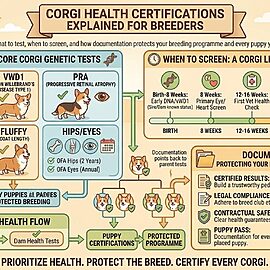
Hip and elbow scoring — Performed at 24 months (OFA or equivalent South African systems).
Annual eye examinations — By a certified ophthalmologist (ACVO or equivalent).
Genetic/DNA testing — Including Degenerative Myelopathy (DM), von Willebrand’s Disease (vWD), and other breed-relevant markers.
Infectious disease screening — Brucellosis, heartworm, and full blood chemistry panels.
Progesterone monitoring — Essential for accurate ovulation timing in breeding cycles.
Working closely with a reproduction-specialized veterinarian ensures that your breeding program meets both ethical and legal standards in South Africa.
Breeding Decisions – When and How to Proceed After First Heat
The first heat cycle provides critical insights, but it is rarely the right time for breeding in a responsible program.
Ethical Timing
Most responsible breeders, including those following KUSA guidelines, wait until the bitch is at least **24 months old**, has completed at least two full cycles, and has passed all health clearances. This allows full skeletal and mental maturity, better litter outcomes, and reduced risk to the dam.
Pros of breeding on early cycles (very rare cases). May provide limited fertility pattern data.
Cons. Higher complication rates, smaller litters, incomplete physical development of the dam, and potential long-term health impacts.
Stud Selection
Choose a stud dog based on:
Complementary health clearances and genetic testing results.
Compatible temperament and conformation.
Strong pedigree analysis to maintain or improve breed standards.
Clear, written breeding contracts covering responsibilities, fees, and puppy ownership.
Breeding Management
Progesterone testing is essential for precise ovulation timing, especially after a first heat when cycles may still be irregular.
Decide between natural mating or artificial insemination (AI) based on geography, health, and compatibility.
Begin whelping preparation several weeks in advance: prepare a suitable whelping box with low sides for Corgi anatomy, stock emergency supplies, and line up 24/7 veterinary support.
Litter Planning
Design your whelping area with Corgi-specific needs in mind — easy access for a low-bodied dam and adequate space for a typical litter of 4–7 puppies. Align puppy socialization and early neurological stimulation protocols with the resources available in our Corgi Crew Knowledge Network.
Record Keeping
Maintain meticulous records using pedigree software. Log every heat cycle, health test result, mating details, pregnancy progress, and whelping outcomes. Follow up with puppy buyers for at least two years to track long-term health and temperament.
By approaching breeding decisions methodically after the first heat, you protect your bitches, produce superior puppies, and uphold the reputation of ethical Pembroke Welsh Corgi breeding in South Africa.
Conclusion and Checklists
Mastering the first heat cycle in female Pembroke Welsh Corgis is far more than a management task — it is a defining opportunity to demonstrate your commitment to ethical, science-based breeding. When handled with care, knowledge, and foresight, this milestone strengthens your entire breeding program, protects the health and wellbeing of your bitches, and produces confident, structurally sound puppies that thrive in their new homes.
The difference between average breeders and truly exceptional ones lies in how they use the first heat. Not as a moment to rush into breeding, but as a critical learning phase that informs every future decision. By prioritizing patience, thorough health testing, detailed record-keeping, and continuous education, you contribute to the long-term preservation and improvement of the Pembroke Welsh Corgi breed in South Africa and beyond.
Quick First Heat Checklist
Daily monitoring log started with dated photos and behavior notes.
Vet consultation scheduled for baseline health check.
Containment and hygiene plan fully in place.
Health testing timeline updated and aligned with KUSA standards.
All observations added to your permanent breeding database.
Breeder Decision Tree (for future litters)
Has the bitch reached 24 months with full skeletal maturity?
Have all required health clearances been completed?
Is her temperament stable and cycles predictable?
Does this breeding genuinely advance your line?
Is full whelping support and puppy placement plan ready?
By following these evidence-based practices, we uphold the highest standards of responsible Corgi breeding in South Africa. At Pember Diamonds and Corgi Crew, our mission extends beyond producing beautiful puppies — we are committed to building a healthier, better-educated Corgi community for generations to come.
We invite you to explore the full Knowledge Network, download our free resources, and join us in championing ethical breeding practices.
Expert Opinion
As breeders operating within the Pember Diamonds and Corgi Crew ecosystem in South Africa, we strongly advocate for a measured, health-first approach to the first heat cycle. In our experience with Pembroke lines, rushing into breeding after the first or even second cycle often compromises long-term skeletal integrity and litter quality. We recommend waiting until the bitch is **fully mature (24+ months)**, has passed comprehensive health screenings (hips, elbows, eyes, DNA), and has demonstrated stable cycles. This aligns with KUSA ethical standards and global best practices from organizations like the AKC and PWCCA. The first heat provides invaluable data on her individual physiology — use it for record-keeping and planning, not immediate reproduction. Prioritizing welfare over speed builds sustainable, reputable breeding programs and produces healthier puppies that thrive in their new homes.
1. At what exact age do most Pembroke Welsh Corgi females have their first heat?
Most Corgis experience their first heat between 6 and 12 months, commonly around 7–9 months. Smaller or faster-maturing lines may cycle earlier; runts or slower developers may delay until 12–14 months. Track genetics in your lines.
2. How long does a Corgi’s first heat cycle typically last?
The full cycle usually lasts 18–25 days. Proestrus (bleeding) averages 7–10 days, and estrus (fertile standing heat) averages 7–9 days. First cycles can be irregular or lighter than subsequent ones.
3. What are the most reliable signs of first heat in a Corgi?
Vulvar swelling, bloody or straw-colored discharge, increased licking, restlessness, tail flagging, and behavioral changes (clinginess, mounting, or heightened scent interest). Corgis’ thick coats can hide early swelling, so daily checks are essential.
4. Should I breed my Corgi on her first heat cycle?
No. Responsible breeders wait until at least the second or third cycle and preferably until the bitch is 24 months old with full health clearances. Breeding too early can affect growth plates, increase complication risks, and impact future litter sizes.
5. How can I prevent an accidental pregnancy during her first heat?
Strict separation from intact males, use of dog diapers/pants, leash-only outings, and secure containment. Scent can attract males from a distance — supervise constantly.
6. Are there special nutritional needs during a Corgi’s first heat?
Maintain a high-quality diet. Monitor appetite (some increase, others decrease). Support joint health with glucosamine/omega-3s due to hormonal effects on developing bones. Avoid overfeeding to prevent weight gain that stresses the back.
7. What is the risk of pyometra in intact Corgis?
Pyometra risk increases with each cycle and age. It is a life-threatening uterine infection. Spaying after health contributions or careful monitoring is key for non-breeding females.
8. How does the first heat affect a Corgi’s risk of mammary tumors?
Spaying before the first heat reduces mammary tumor risk to ~0.5%. Risk rises to ~8% after one heat and ~26% after two. This is an important consideration for pet vs. breeding females.
9. Should I use progesterone testing for my breeding Corgi?**
Yes — it is highly recommended for precision ovulation timing, especially in first cycles which can be unpredictable. This improves conception rates and reduces unnecessary breedings.
10. Can a Corgi have a “silent” or split heat on her first cycle?
Yes. Some first heats are subtle (“silent”) with minimal external signs, or split (interrupted). Progesterone testing and cytology help confirm ovulation.
11. How often do Corgis cycle after the first heat?
Typically every 6–8 months, though this varies by individual. Some cycle every 5 months; others every 8–10 months. Record patterns for each bitch.
12. What orthopedic concerns are specific to breeding Corgis after first heat?
Hormones influence growth plate closure. Early breeding can exacerbate risks of intervertebral disc disease (IVDD) and hip dysplasia, which are concerns in the breed due to their long back and short legs.
13. When is the best time to spay a non-breeding Corgi female?
For pets, many vets recommend spaying after the first heat (around 9–12 months) but before the second to balance cancer prevention with some hormonal development. Discuss with your veterinarian.
14. How should I prepare my whelping setup based on first heat data?
Use the first heat to plan: design a low-entry whelping box suitable for Corgi anatomy, stock supplies, and line up veterinary support. Start socialization protocols early.
15. What records should I keep after a Corgi’s first heat?
Detailed logs of dates, signs, duration, behavior, progesterone levels (if tested), weight, and any issues. Integrate this into your breeding software or database for lineage tracking and future decisions.
Expert Opinion
As breeders within the Pember Diamonds and Corgi Crew ecosystem in South Africa, we strongly recommend using the first heat as a learning and planning phase rather than a breeding opportunity. Waiting until the bitch is fully mature (24+ months) with complete health testing produces healthier litters and protects the long-term welfare of the dam. This approach aligns with KUSA ethical standards and best practices for the breed.
This pillar article serves as the foundational reference for the following cluster articles:
Cluster Article 1: Progesterone Testing In Dogs — Learn how progesterone testing helps pinpoint the optimal breeding window in dogs.
Cluster Article 2: Your Female Dog's First Heat Cycle — What to expect and how to respond when your female dog experiences her first heat cycle.
Cluster Article 3: Canine Heat Cycle & Ovulation Tracking — A comprehensive guide to understanding and tracking your dog's heat cycle and ovulation stages.
Disclaimer
This article is for informational and educational purposes only and does not constitute professional veterinary advice. Progesterone testing, heat cycle monitoring, and breeding decisions should always be made in consultation with a qualified veterinarian. The authors and website accept no liability for any actions taken based on the information in this article.










 This pillar article serves as the foundational reference for the following cluster articles: