Pember Diamonds – A Member Of KUSA, Registration Number 1031350
Genetics and Inheritance in the Companion Dog
Why does one Labrador from the same litter develop hip dysplasia while their sibling remains sound into old age? Why does a Border Collie herd shadows while a Basset Hound barely notices a squirrel crossing the yard? And why, when you look at your own dog, can you see echoes of their great-great-grandparent in the set of their ears or the way they carry their tail?
These are not idle curiosities. They are the surface symptoms of a deeper question that every Guardian eventually confronts: **How much of who my dog is was determined before I ever met them, and how much can I still shape?**
The answer sits at the intersection of molecular biology, evolutionary history, and the deliberate (and sometimes accidental) choices humans have made over millennia. Canine genetics is not merely a veterinary specialty or a breeder's concern. It is the invisible architecture underlying every health decision, every training challenge, every behavioral tendency, and every emotional bond you will form with the dog in your care. Understanding it does not require a PhD. It requires a clear map of what we actually know, what remains uncertain, and what you can do with that knowledge as a Guardian.
Genetics is the study of heredity — how traits pass from parents to offspring through the transmission of DNA. Inheritance refers to the specific patterns by which those traits are distributed: whether a single gene dominates, whether multiple genes interact, or whether environmental factors alter how genes express themselves.
In dogs, genetics operates through the same fundamental mechanisms as in all mammals. Each dog inherits two copies of every chromosome — one from each parent — carrying an estimated 19,000–20,000 protein-coding genes within a genome of roughly 2.4 billion base pairs. The domestic dog (Canis lupus familiaris) shares approximately 99% of its DNA with the gray wolf (Canis lupus), yet displays a phenotypic diversity — variation in observable traits — unmatched by any other mammalian species. A Great Dane and a Chihuahua are the same species. That fact alone tells you something extraordinary about what directed selection can do to a genome in a relatively short evolutionary window.
Inheritance patterns in dogs fall into several categories:
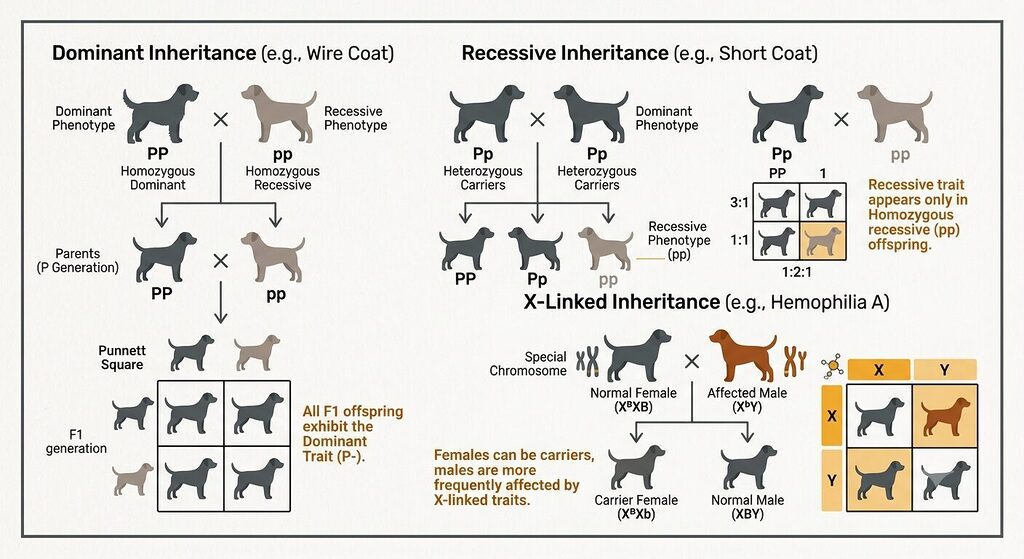
Mendelian (single-gene) inheritance: Traits controlled by one gene with dominant and recessive alleles (variant forms). Examples include coat color dilution, some forms of progressive retinal atrophy, and certain blood disorders.
Polygenic (complex) inheritance: Traits influenced by many genes, often interacting with environmental factors. Hip dysplasia, temperament, and body size are classic examples.
Mitochondrial inheritance: Traits passed exclusively from mother to offspring through mitochondrial DNA, which lies outside the cell nucleus.
Epigenetic modification: Changes in gene expression that do not alter the DNA sequence itself but can be influenced by environment, stress, nutrition, and age — and may, in some cases, be heritable across generations.
Key terms an Owner should know:
Allele: A variant form of a gene. A dog inherits two alleles for each gene — one from each parent.
Genotype: The genetic makeup of an individual (e.g., *Bb* for a heterozygous carrier of a recessive trait).
Phenotype: The observable expression of the genotype — what you actually see (e.g., black coat, anxious behavior, sound hips).
Homozygous: Having two identical alleles for a gene (*BB* or *bb*).
Heterozygous: Having two different alleles (*Bb*).
Penetrance: The proportion of individuals with a particular genotype who actually express the associated phenotype. A gene with 80% penetrance means 20% of dogs carrying it may never show symptoms.
Expressivity: The degree to which a genotype is expressed phenotypically. Two dogs with the same mutation may show mild and severe forms of the same condition.
Linkage disequilibrium: The non-random association of alleles at different loci, common in purebred dogs due to population bottlenecks and selective breeding.
Understanding these terms is not academic ornamentation. When your veterinarian discusses whether your dog is a "carrier" for a hereditary condition, or when a breeder shows you genetic test results, these are the concepts underlying every number and abbreviation on the page.
The Science
The Canine Genome and What It Reveals
The sequencing of the domestic dog genome in 2005 — led by the Broad Institute's Kerstin Lindblad-Toh and colleagues using a female Boxer named Tasha — marked a turning point in canine biology. The dog was chosen not merely because of human affection for the species, but because its population structure — characterized by hundreds of distinct breeds with limited genetic diversity within each breed — offered an unparalleled natural experiment in genotype-phenotype mapping.
Research Spotlight
The Original Canine Genome Sequence
Study: Lindblad-Toh et al. (2005), *Nature* — "Genome sequence, comparative analysis and haplotype structure of the domestic dog"
Sample & Method: Whole-genome shotgun sequencing of a female Boxer (Tasha), with comparative analysis across 10 diverse breeds using 120,000 SNP markers.
Key Finding: The 2.4 billion base-pair genome revealed that within breeds, large blocks of DNA remain identical by descent — linkage disequilibrium extends 50–100 times farther than in humans — creating a genetic structure that makes disease-gene mapping feasible with far fewer subjects than human studies require.
Why it matters here: This is the foundational study that made modern canine genetic testing possible. Without knowing that purebred dogs carry such long, identical chromosome segments, we would not understand why a single mutation can sweep through a breed in just a few generations — or why genetic testing is so effective at pinpointing breed-specific disease risks.
Lindblad-Toh et al. (2005) demonstrated that the dog genome contains roughly 2.4 billion base pairs, organized into 38 pairs of autosomes plus sex chromosomes. The researchers identified extensive blocks of linkage disequilibrium within breeds — meaning that genetic variants cluster together in predictable patterns. This is a direct consequence of closed stud books and artificial selection: when breeders select for specific traits, they inadvertently select for everything genetically linked to those traits, including deleterious mutations.
The practical implication is profound. If a disease-causing mutation sits near a gene selected for desirable traits (say, coat texture or body size), it becomes "hitchhiked" into the breed population. This phenomenon, known as **selective sweep**, explains why many breed-specific diseases cluster with breed-defining characteristics.
Parker et al. (2017)— Genomic Analyses Reveal the Influence of Geographic Origin, Migration, and Hybridization on Modern Dog Breed Development used whole-genome sequencing of 161 breeds to construct a phylogenetic tree of modern dogs. The study confirmed that most modern breeds emerged within the last 200 years — a blink in evolutionary time — and that breed formation involved severe population bottlenecks. The average purebred dog has less genetic diversity than a wild wolf population. This is not a value judgment; it is a measurable genetic reality with direct health consequences.
Inheritance Patterns
From Mendel to Complex Traits
Mendelian Inheritance in Dogs
Gregor Mendel's laws of segregation and independent assortment apply directly to canine genetics. Several well-characterized canine traits follow classic Mendelian patterns:
Autosomal recessive: The dog must inherit two copies of the mutated allele (one from each parent) to express the disorder. Carriers (heterozygotes) are typically phenotypically normal but can pass the mutation to offspring. Examples include progressive retinal atrophy (PRA) in multiple breeds, von Willebrand disease Type I in Doberman Pinschers, and cystinuria in Newfoundlands.
Autosomal dominant: Only one copy of the mutated allele is required for expression. An affected dog has a 50% chance of transmitting the mutation to each offspring. Examples include some forms of hereditary cataracts and certain skeletal dysplasias.
X-linked: The mutation resides on the X chromosome. Males (XY) express the trait if they inherit the mutation on their single X; females (XX) must inherit it on both X chromosomes to be affected, though they may show milder symptoms if heterozygous. Hemophilia A and some color vision deficiencies follow this pattern.
Incomplete dominance: Heterozygotes show an intermediate phenotype. The "blue" coat color in dogs (dilution of black to gray) is a classic example — dogs with one copy of the dilution allele (*Dd*) have a diluted coat, while those with two copies (*dd*) may additionally suffer from color dilution alopecia, a skin condition associated with the double dose.
Polygenic and Complex Inheritance
Most traits that matter to Guardians — behavior, temperament, longevity, susceptibility to common diseases — do not follow simple Mendelian patterns. They are polygenic, influenced by dozens or hundreds of genes, each contributing a small effect, interacting with each other and with environmental variables.
Karlsson & Lindblad-Toh (2013) — Leash on Genes: Recent Findings in Canine Genomics reviewed the emerging understanding of complex trait genetics in dogs. The authors noted that while Mendelian diseases were the low-hanging fruit of canine genetic research — identifiable through linkage mapping within single breeds — complex traits required different approaches. Genome-wide association studies (GWAS), which scan thousands of genetic markers across many individuals to find associations with traits, have identified loci associated with body size, skull shape, and certain behavioral tendencies.
However, GWAS in dogs faces a significant challenge: **population stratification**. Because breeds are genetically distinct, a trait common in one breed may be associated with breed-specific genetic background rather than causally related to the trait itself. Rigorous studies control for this by comparing affected and unaffected dogs within the same breed, or by using mixed-breed populations where breed background is explicitly modeled.
Body Size as a Model Polygenic Trait
Body size in dogs is one of the most thoroughly studied polygenic traits and serves as an excellent illustration of how multiple genes interact. Rimbault et al. (2013) — Derived variants at six genes explain nearly half the size reduction in dog breeds identified six genes — IGF1, IGF1R, STC2, GHR, HMGA2, and SMAD2 — that together account for approximately 50% of the variation in dog body size across breeds. The IGF1 gene alone explains roughly 15% of size variation.
This is remarkable for two reasons. First, it demonstrates that even "complex" traits can have major-effect loci — genes with disproportionately large influence. Second, it reveals the evolutionary history: small body size in dogs appears to have arisen through selection on ancient wolf variants rather than new mutations, suggesting that the genetic potential for size variation existed in the ancestral population and was amplified by human selection.
For Guardians, the practical takeaway is that "size" is not infinitely malleable within a breed. A Labrador will not produce Chihuahua-sized offspring no matter how small the parents are selected, because the major size-determining loci are fixed within the breed. This has implications for health: selecting for extreme sizes within breed standards can push dogs beyond the healthy range of their genetic architecture.
Behavioral Genetics
What Is Hardwired?
The question of whether behavior is genetic is not really a question — of course it is, to some degree. The meaningful question is, which behaviors, and how much?
Behavioral genetics in dogs has advanced significantly in the past decade, though it remains more complex and contested than physical trait genetics.
Persson et al. (2015) — The usage of standardized behavioural tests in two breeds of dogs in Sweden examined heritability estimates for various behavioral traits in German Shepherds and Rottweilers. Heritability — the proportion of phenotypic variation attributable to genetic variation — ranged from moderate (0.20–0.40) for traits like playfulness and curiosity to higher (0.40–0.60) for traits like aggression and fearfulness. Notably, heritability estimates vary by breed and by the specific behavioral test used, making cross-study comparison difficult.
Ilska et al. (2017) — Genetic Characterization of Dog Personality Traits used data from the C-BARQ (Canine Behavioral Assessment and Research Questionnaire) — the largest standardized behavioral survey in dogs, with over 50,000 responses — to estimate genetic correlations between personality traits. The study found that traits like "stranger-directed aggression," "owner-directed aggression," and "dog-directed fear" showed moderate heritability and were genetically correlated with each other, suggesting shared genetic architecture for reactivity traits.
Crucially, heritability is a population-level statistic, not an individual destiny. A heritability of 0.40 for fearfulness means that, across a population, 40% of the variation in fearfulness is genetic. It does not mean that any individual dog's fearfulness is 40% genetic and 60% environmental. For a single dog, both factors operate inextricably.
MacLean et al. (2019) — Service Dog Program Datasets Reveal Genetic Factors Influencing Behavior and Success analyzed genetic and behavioral data from over 8,000 dogs in a service dog breeding program. The study identified specific genetic variants associated with success in service dog training, including markers near genes involved in neurological development. Dogs with certain genetic profiles were significantly more likely to complete training successfully. This is one of the clearest demonstrations that behavioral genetics in dogs is not merely theoretical — it has practical, predictive value.
However, the study also found that genetic predictions explained only a modest proportion of total variance. Environment, training, and individual life experience remained dominant factors. The authors emphasized that genetic screening should complement, not replace, behavioral assessment and training.
Research Spotlight
Predicting Service Dog Success from Genetics
Study: MacLean et al. (2019), *PNAS* — "Service dog program datasets reveal genetic factors influencing successful assistance dog behavior"
Sample & Method: Genome-wide association study of 8,000+ dogs from a single service dog breeding program, combining SNP genotyping with standardized behavioral assessments and training outcome records over a 15-year period.
Key Finding: Specific genetic markers near genes involved in neurological development (including *GNAL* and *NCDN*) were significantly associated with training success, yet together explained less than 10% of total variance — meaning genetics sets probabilistic tendencies, not deterministic outcomes.
Why it matters here: This study directly refutes both genetic determinism ("it's all in the DNA") and environmental determinism ("it's all how you raise them"). For Guardians, the actionable insight is that genetic screening can flag puppies who may need additional behavioral support — but cannot replace observation, training, and individualized care. A high-genetic-risk puppy given excellent early intervention may outperform a low-risk puppy raised neglectfully.
Expert Insight
Dr. Evan MacLean, Director of the Arizona Canine Cognition Center at the University of Arizona, has conducted extensive research on the genetic basis of canine cognition and behavior. His work on service dog genetics (MacLean et al., 2019) demonstrated that while genetic markers can predict training success with statistical significance, the effect sizes are modest — suggesting that genetics sets probabilities, not destinies. MacLean's research program emphasizes that the most actionable insight from canine behavioral genetics is not "this dog will be X" but "this dog may need additional support in Y" — a framing that shifts genetic knowledge from deterministic labeling to proactive Guardianship.*
Epigenetics
The Environment Writes on the Genome
Epigenetics refers to heritable changes in gene expression that do not involve changes to the underlying DNA sequence. The most studied epigenetic mechanisms are DNA methylation (the addition of methyl groups to DNA, typically suppressing gene expression) and histone modification (changes to the proteins around which DNA is wound, affecting how accessible genes are for transcription).
Epigenetics bridges the false nature-nurture dichotomy. A dog's experiences — nutrition, stress, maternal care, toxin exposure — can alter epigenetic marks, changing how genes are expressed. Some of these marks may be stable enough to persist through cell division, and emerging evidence in mammals suggests that certain epigenetic changes can be transmitted to offspring.
Hekman et al. (2014) — A Comparison of the Transcriptional Landscape of Blood and Brain in Dogs examined gene expression differences between blood and brain tissue in dogs, identifying tissue-specific epigenetic patterns. While this study did not directly address transgenerational epigenetic inheritance, it established methodological frameworks for studying canine epigenetics.
More directly relevant to Guardians, Braun et al. (2019) — Maternal stress and offspring development in dogs (review) examined evidence that prenatal stress in dam dogs — caused by poor housing, nutritional deprivation, or social instability — can alter offspring behavior and stress reactivity through epigenetic mechanisms. The review found consistent evidence across mammalian species (including limited canine data) that maternal stress hormones cross the placental barrier and program the developing hypothalamic-pituitary-adrenal (HPA) axis, with lasting effects on stress responses.
This has direct implications for breeding ethics and puppy selection. A puppy from a stressed mother may carry not just genetic risk factors, but epigenetic modifications that predispose them to anxiety — modifications that are not detectable on standard genetic tests.
Population Genetics and the Cost of Breed Formation
The formation of modern dog breeds represents one of the most intensive genetic experiments in history — and it has come with measurable costs.
Research Spotlight
The Genetic Cost of Bulldog Breed Formation
Study: Pedersen et al. (2016), Canine Genetics and Epidemiology — A genetic assessment of the English bulldog
Sample & Method: Genetic analysis of 102 English Bulldogs using 33 STR (microsatellite) markers, compared against published data from 122 other breeds and village dogs, measuring heterozygosity, allelic diversity, and inbreeding coefficients.
Key Finding: English Bulldogs showed extremely low genetic diversity (heterozygosity comparable to island foxes and Scandinavian wolves on the brink of extinction), with the breed's gene pool so depleted that the authors concluded there is "little to no ability to improve the breed's health from within its existing genetic stock.
Why it matters here: This is not merely a cautionary tale about one breed. It demonstrates that closed stud books and extreme phenotype selection can push a population past a genetic tipping point where standard breeding practices cannot recover health. For Guardians considering any brachycephalic breed — or any breed with a small founding population — this study underscores why genetic diversity testing and outcrossing discussions are not radical proposals but necessary preventive measures.
Calboli et al. (2008) — Population Structure and Inbreeding From Pedigree Analysis of Purebred Dogs analyzed pedigree data from over 500,000 dogs across 10 breeds. The study found effective population sizes (a measure of genetic diversity) ranging from roughly 50 to 200 in most breeds — extraordinarily low compared to wild populations. Inbreeding coefficients (the probability that two alleles at a locus are identical by descent) averaged 5–15% across breeds, with some individuals exceeding 25%.
High inbreeding increases the probability that deleterious recessive alleles become homozygous — expressed as disease. It also reduces overall fitness through **inbreeding depression**: reduced fertility, smaller litter sizes, shorter lifespans, and weakened immune function.
Pedersen et al. (2016) — A Genetic Assessment of the English Bulldog used genetic analysis to argue that the breed has reached a genetic dead end — with so little diversity remaining that further breeding within the closed population will inevitably increase inbreeding and associated health problems. While this conclusion remains debated among breeders and geneticists, the underlying data — extremely low genetic diversity, high frequency of deleterious alleles — is not disputed.
Conversely, mixed-breed dogs generally show higher heterozygosity and lower inbreeding coefficients. Studies comparing purebred and mixed-breed health consistently find that mixed breeds have lower incidence of many breed-specific genetic disorders, though they are not immune to common conditions like cancer or hip dysplasia (which have complex, multi-breed genetic architecture).
The Genetic Load Concept
Every population carries a certain number of deleterious mutations — this is called **genetic load**. In large, randomly mating populations, these mutations are usually rare and carried in heterozygous state where they are masked. In small, inbred populations like dog breeds, genetic load becomes expressed as disease at higher rates. This is not a flaw in any individual dog; it is a population-level consequence of breeding history.
Modern Genetic Testing
What It Can and Cannot Do
The commercial availability of canine genetic testing has expanded dramatically. Tests now range from single-gene mutation tests (for known Mendelian disorders) to SNP arrays examining hundreds of thousands of genetic markers, to whole-genome sequencing.
What genetic testing can reliably do: - Identify carriers of known Mendelian disease mutations (e.g., PRA, degenerative myelopathy, von Willebrand disease) - Determine parentage and verify pedigree - Estimate breed ancestry in mixed-breed dogs - Screen for some coat color and trait genotypes
What genetic testing cannot reliably do: - Predict complex polygenic traits (behavior, temperament, hip dysplasia risk) with high accuracy - Guarantee health — absence of tested mutations does not mean absence of disease - Replace veterinary examination and diagnostic workup - Predict epigenetic modifications or environmental interactions
This is not merely a cautionary tale about one breed. It demonstrates that closed stud books and extreme phenotype selection can push a population past a genetic tipping point where standard breeding practices cannot recover health. For Guardians considering any brachycephalic breed — or any breed with a small founding population — this study underscores why genetic diversity testing and outcrossing discussions are not radical proposals but necessary preventive measures.
Research Spotlight
Disease Mutations Are Widespread Across All Dogs
Study: Donner et al. (2018), *PLOS ONE* — "Frequency and distribution of 152 genetic disease variants in over 100,000 mixed breed and purebred dogs
Sample & Method: Retrospective analysis of commercial genetic test results from 100,029 mixed-breed and purebred dogs, screening for 152 known disease-causing mutations across all breeds.
Key Finding: Disease-causing mutations previously considered "breed-specific" were found in multiple breeds and in mixed breeds at appreciable frequencies. For example, the degenerative myelopathy *SOD1* mutation — often called a "German Shepherd disease" — was detected in over 100 breeds and 22% of mixed-breed dogs tested.
Why it matters here: This fundamentally changes how Guardians should think about genetic risk. Breed-specific testing is not enough — a mixed-breed dog is not "safe" from breed-associated diseases simply because they lack a pedigree. It also means breeders who claim their lines are "clean" because they test for the three mutations common in their breed may be missing mutations that entered through outcrossing or shared ancestry. Comprehensive screening, not breed-limited screening, is the evidence-based standard.
Donner et al. (2018) analyzed genetic test results from a large commercial database. The study found that disease-causing mutations are widely distributed across breeds — many mutations previously considered "breed-specific" were found in multiple breeds and in mixed breeds. This suggests that genetic testing should not be limited to "high-risk" breeds and that mixed-breed dogs can also benefit from screening.
The study also found that the frequency of disease variants varied significantly between breeds, confirming that breed-specific genetic risk profiles are real — but also that no breed is genetically "clean."
How It Develops Across Life Stages
Genetics is not a static blueprint that unfolds identically from birth. The expression of genetic potential varies across life stages, influenced by developmental timing, environmental triggers, and accumulated epigenetic changes.
Puppyhood (0–6 months)
Genetic Potential Meets Early Environment
The puppy stage is when genetic predispositions first become observable — and when environmental interventions have the greatest potential to modify genetic outcomes.
1.Neonatal period (0–2 weeks): Puppies are neurologically immature, but genetic differences in temperament are already measurable. Wilsson & Sundgren (1998) — Behaviour test for eight-week old puppies — heritabilities of tested behaviour traits and its correspondence to later behaviour** established that behavioral traits measured at 8 weeks show moderate heritability and predict later adult behavior with reasonable accuracy. However, the predictive power is strongest for traits with high genetic loading (e.g., activity level, exploratory behavior) and weaker for socially learned behaviors.
2.Socialization period (3–12 weeks): This is the critical window when genetic predispositions interact most dynamically with experience. A genetically bold puppy denied socialization may develop fear-based behaviors that a genetically cautious puppy given excellent socialization might avoid. The genetic component sets the range; environment determines where within that range the dog lands.
Implication for Owners: Genetic testing of puppies is most useful for known Mendelian disease risks. Behavioral predictions based on puppy genetics remain probabilistic — a puppy genetically predisposed to anxiety is not doomed to anxiety, but may need more structured, careful socialization than a genetically resilient littermate.
3. Adolescence (6–18 months): Genetic Programs Activate. Adolescence in dogs is marked by hormonal changes, brain reorganization, and the activation of genetic programs that were latent in puppyhood. This is when breed-typical behaviors often intensify.
Breed-specific behavioral genetics often manifest most clearly during adolescence. A Border Collie's herding instinct, a Beagle's scent-drive, a Livestock Guardian Dog's territoriality — these tendencies may have been present as puppy preferences but become pronounced as the dog matures. This is not "bad behavior" or failure of training; it is the phenotypic expression of genetic architecture selected over generations.
Puberty also marks the period when some genetic health conditions first become detectable. Hip dysplasia, for example, involves genetic predisposition to loose hip joints combined with growth rate and body weight. The genetic component is present from conception, but the phenotypic expression — pain, gait abnormalities, radiographic changes — typically emerges during rapid growth phases.
4. Adulthood (1.5–7 years). Genetic Expression Stabilizes. In adulthood, the interaction between genotype and environment has largely stabilized. The dog's observable traits reflect the cumulative expression of genetic potential shaped by experience.
This is the stage where genetic health conditions with adult onset become relevant. Progressive conditions like degenerative myelopathy, certain cardiac diseases, and some forms of cancer have genetic components that may not trigger until middle age. Regular health screening — informed by breed-specific genetic risk profiles — becomes essential.
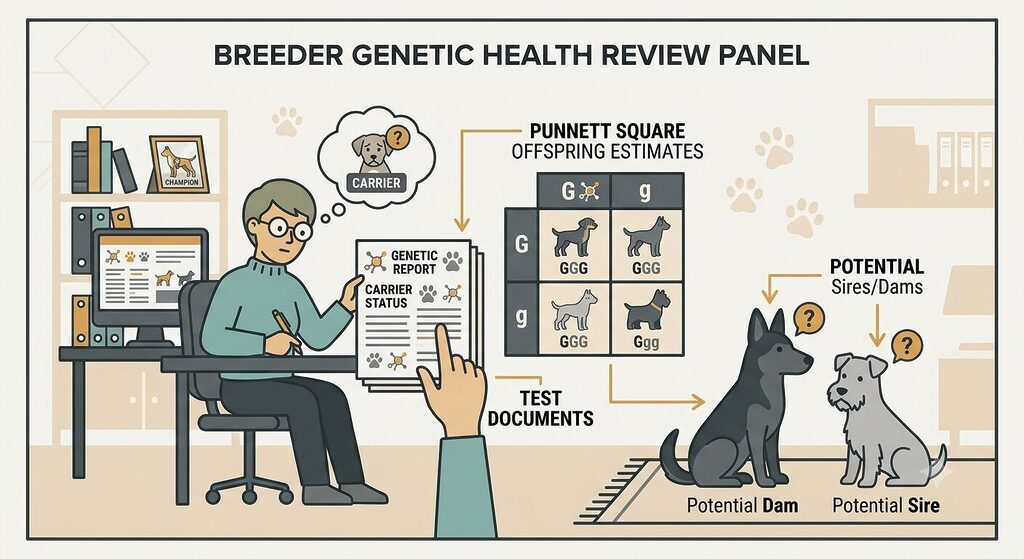
Breeding decisions, if relevant, should be informed by genetic testing of adults. A dog that is phenotypically healthy but carries recessive disease mutations can be safely bred only to tested-clear partners, preventing affected offspring while preserving genetic diversity.
Senior Years (7+ years): Genetic Risk Meets Accumulated Damage. Aging is, in part, the accumulated expression of genetic vulnerabilities combined with cellular damage over time. Genetic variants that affect DNA repair mechanisms, antioxidant defenses, and inflammatory responses influence how rapidly a dog ages and which age-related conditions develop.
Some genetic tests are specifically relevant to senior dogs. The APOE gene variant in dogs, analogous to the human APOE4 Alzheimer's risk variant, has been investigated in canine cognitive dysfunction. While research is ongoing, genetic risk profiling for cognitive decline may become a standard part of senior wellness screening.
Epigenetic clocks — measures of biological age based on DNA methylation patterns — have been developed for dogs and show promise for predicting remaining lifespan and health trajectory. **Thompson et al. (2017)** demonstrated that DNA methylation patterns in dogs correlate with chronological age and may offer a more accurate measure of biological aging than calendar age alone.
What Influences It / What It Influences
Genetics and inheritance do not exist in isolation. They are nodes in a network of causal relationships with other domains of canine knowledge. Understanding these connections helps Guardians navigate the broader ecosystem of canine care.
Genetics ↔ Development (Domain: Development)
Genetics provides the raw material; development shapes how that material is expressed. The developmental domain — covering neonatal care, socialization, training, and cognitive development — is where genetic potential is most directly modifiable.
- Key linkage: Early life stress can alter epigenetic marks that persist into adulthood, affecting behavior and stress resilience. A genetically identical clone raised in different environments would develop differently (as demonstrated in twin studies across species).
- Practical implication: Guardians cannot change their dog's genotype, but they can significantly influence the developmental environment that determines phenotypic outcomes. This is the domain of maximum Guardian agency.
Genetics ↔ Individuality (Domain: Individuality)
Every dog is genetically unique (with the exception of clones and identical twins, which are vanishingly rare in dogs). The Individuality domain — personality, temperament, emotional style — is the phenotypic expression of genetic individuality filtered through individual experience.
- Key linkage: Behavioral genetics research shows that personality traits have moderate heritability but are not deterministic. The same genetic variant may express differently depending on early environment.
- Practical implication: Understanding that your dog's temperament has genetic roots can foster empathy — a fearful dog is not "badly behaved" but may be genetically predisposed and require tailored support.
Genetics ↔ Shared Life (Domain: Shared Life)
The Shared Life domain covers daily routines, training, exercise, nutrition, and the practical rhythms of living with a dog. Genetics influences what kind of shared life is most compatible with a given dog.
- Key linkage: A dog genetically predisposed to high activity and work drive will not thrive in a sedentary household, regardless of training. Conversely, a genetically low-energy dog may struggle with intensive athletic lifestyles.
- Practical implication: Breed and individual genetic profiles should inform lifestyle choices — not to limit dogs, but to match them with environments where they can succeed.
Practical Application
Genetic knowledge is only valuable if it changes what Guardians do. This section translates the science into concrete, actionable guidance.
Before You Bring a Dog Home
Genetic Literacy as a Selection Tool
1. Research breed-specific genetic risks before choosing a breed or breeder.
Every breed carries a characteristic genetic load. Reputable breed clubs publish health surveys; the Orthopedic Foundation for Animals (OFA) maintains databases of hip, elbow, and cardiac evaluations; the Canine Health Information Center (CHIC) tracks recommended health screenings by breed.
Red Flags: A breeder who cannot or will not discuss genetic health testing, who claims their lines are "completely healthy" (no breed is), or who dismisses genetic concerns as "overblown."
Success Criteria: You can name the top 3–5 genetic health conditions associated with your chosen breed and know what tests exist for them.
2. Ask for genetic test results, not just health guarantees.
A health guarantee is a commercial promise; genetic test results are data. Request documentation of:
DNA testing for known Mendelian mutations relevant to the breed
OFA or PennHIP evaluation for hip dysplasia (where relevant)
Cardiac evaluation by a board-certified cardiologist (for breeds at risk)
Eye examination by a board-certified veterinary ophthalmologist (CERF/ECVO)
3. Consider mixed-breed adoption through the genetic lens.
Mixed-breed dogs generally have lower risk of breed-specific genetic disorders and higher overall genetic diversity. However, they are not immune to genetic disease — common complex conditions like cancer, hip dysplasia, and epilepsy occur across breeds. Genetic testing of mixed-breed dogs (through commercial DNA tests) can identify breed ancestry and known mutation carriers, informing health monitoring.
During Your Dog’s Life
Genetic-Informed Health Management
1. Maintain a genetic health record.
Keep copies of: - DNA test results (with laboratory name, test date, and specific mutations tested) - OFA/PennHIP evaluations - Cardiac and ophthalmology examination certificates - Any breed-specific screening results
Update this record annually. Genetic understanding evolves — a mutation not tested for five years ago may now have a commercial test available.
2. Use genetic information to tailor preventive care.
If your dog carries a mutation associated with dilated cardiomyopathy (DCM), your veterinarian may recommend more frequent cardiac monitoring and specific dietary considerations. If your dog is at genetic risk for intervertebral disc disease (IVDD), weight management and activity modification become higher priorities.
3. Understand the limits of genetic prediction.
A clear genetic test for a Mendelian condition is definitive — your dog either carries the mutation or does not. But genetic risk for complex conditions (hip dysplasia, many cancers, behavioral disorders) is probabilistic. A dog with elevated genetic risk may never develop the condition; a dog with low genetic risk still can. Use genetic information to inform vigilance, not to create false security or unnecessary anxiety.
Breeding Decisions
If You Breed
1. Test before breeding.
Both prospective parents should be tested for all known Mendelian mutations relevant to the breed. If both carry the same recessive mutation, every puppy has a 25% chance of being affected. This risk is manageable through informed mate selection or assisted reproductive technologies — but only if testing occurs first.
2. Preserve genetic diversity.
The long-term health of any breed depends on maintaining genetic diversity. Avoid repeated close inbreeding (parent-offspring, full sibling matings). Use genetic diversity testing (offered by some laboratories) to select mates that maximize heterozygosity while preserving desirable traits.
3. Consider the epigenetic environment of the dam.
The mother's stress level, nutrition, and health during pregnancy affect offspring through epigenetic mechanisms. Provide optimal prenatal care not merely for the mother's health, but for the developmental programming of the puppies.
Common Misconceptions
Misconception 1: "Purebred dogs are always less healthy than mixed breeds."
Correction: Mixed-breed dogs generally have lower incidence of breed-specific genetic disorders due to higher genetic diversity. However, they are not universally healthier. Complex conditions like cancer, obesity, and hip dysplasia occur across all dogs. Additionally, some purebred populations with active health testing and genetic management may have lower disease incidence than untested mixed populations. The relevant variable is not purity of breed, but genetic health management.
Misconception 2: "If a genetic test is clear, my dog won't get that disease."
Correction: Genetic tests screen for specific known mutations. A "clear" result means your dog does not carry the tested mutation(s) — but there may be other, untested mutations causing the same condition, or the condition may have non-genetic causes. Additionally, most genetic tests screen for Mendelian conditions; complex diseases like cancer or hip dysplasia cannot be predicted by single-gene tests.
Misconception 3: "Behavior is all in how you raise them — genetics doesn't matter."
Correction: While environment and training profoundly shape behavior, genetics sets the range of possibilities. A dog genetically predisposed to high fearfulness will not become a confident therapy dog through socialization alone — though excellent socialization can move them toward the healthier end of their genetic range. Conversely, a genetically resilient dog may tolerate suboptimal socialization without developing behavioral problems. Neither extreme ("it's all genetics" nor "it's all environment") is correct.
Misconception 4: "DNA tests can tell me exactly what my mixed-breed dog will look and act like."
Correction: Commercial DNA tests estimate breed ancestry by comparing your dog's genetic markers to reference databases. They cannot predict appearance or behavior with precision. A dog with 25% Border Collie ancestry may show none of the breed's typical behaviors, because behavior is polygenic and ancestry percentage does not map linearly to trait expression.
Breed Note
This article has addressed genetics and inheritance in the general companion dog. However, the specific genetic architecture varies significantly by breed — each breed represents a distinct genetic isolate with its own characteristic mutations, diversity levels, and selection history.
The Applied Pillar articles in this cluster explore these differences in depth:
- Corgi Genetics and Inheritance examines the genetic basis of chondrodysplasia (short-legged dwarfism), FGF4 retrogene-associated IVDD risk, coat color genetics, and breed-specific health screening protocols for the Pembroke Welsh Corgi.
- Beagle Genetics and Inheritance covers scent-hound specific genetics, including olfactory receptor gene diversity, hereditary epilepsy risk, hypothyroidism genetics, and the polygenic architecture of the Beagle's characteristic temperament.
These breed-specific articles build on the foundation established here. The science of inheritance is universal; its expression is particular.
Related Reading
Canine Reproduction and Breeding Ethics - explores the practical and ethical dimensions of breeding decisions, complementing the genetic principles covered here.
Puppy Developmental Stages— examines how genetic potential unfolds through critical developmental windows, linking genetic inheritance to observable growth and behavior.
Corgi Genetics and Inheritance — applies the principles from this article to the specific genetic landscape of the Pembroke Welsh Corgi, including breed-specific health risks and screening protocols.
Self-Check Questions
Before proceeding to the FAQ, test your understanding:
Can you explain the difference between Mendelian and polygenic inheritance, and give one example of each in dogs?
If a genetic test shows your dog is a "carrier" for a recessive condition, what does that mean for their health and for breeding decisions?
Why might two dogs with the same genetic mutation for a behavioral trait show different levels of that behavior?
What is the practical limitation of genetic testing for complex conditions like hip dysplasia or anxiety?
1. How much of my dog's personality is genetic versus learned?
Personality in dogs is estimated to be moderately heritable — roughly 20–50% of variation in traits like fearfulness, aggression, and sociability is attributable to genetics, depending on the trait and breed. The remaining 50–80% is environmental, including early socialization, training, and life experience. However, heritability is a population statistic, not an individual formula. For your specific dog, genetics and environment are inseparably intertwined. A genetically fearful dog given excellent socialization may outperform a genetically resilient dog raised in isolation.
2. Can genetic testing predict if my puppy will develop hip dysplasia?
No — not with current commercial tests. Hip dysplasia is a complex, polygenic condition influenced by multiple genes, growth rate, body weight, and exercise patterns. While research has identified some genetic markers associated with risk, no test can predict hip dysplasia with high accuracy. The best preventive measures are: selecting parents with excellent hip evaluations (OFA or PennHIP), maintaining lean body condition, avoiding excessive calorie intake during growth, and providing appropriate exercise without overloading developing joints.
3. What does it mean if my dog is a “carrier” for a genetic disease?
A carrier is heterozygous for a recessive mutation — they have one normal allele and one mutated allele. Carriers are typically phenotypically healthy (no symptoms) because the normal allele compensates. However, if bred to another carrier, each offspring has a 25% chance of inheriting two mutated alleles and developing the disease. Carriers can be safely bred to genetically clear (non-carrier) dogs, producing no affected offspring. Being a carrier is not a health problem for the individual dog; it is a breeding consideration.
4. Are mixed-breed dogs really healthier than purebreds?
Mixed breeds often show lower risk for many single-gene (Mendelian) disorders due to higher heterozygosity ("hybrid vigor" for those traits). However, they are not immune to complex/polygenic issues (e.g., cancer, hip dysplasia, epilepsy), which show similar prevalence across groups in large studies. Purebreds can be healthy with good testing/breeding; poor breeding in mixes carries risks too. Recent large studies (e.g., Dog Aging Project) find overall health profiles more similar than popularly assumed.
5. How accurate are commercial DNA breed tests for mixed-breed dogs?
Breed ancestry tests compare your dog's genetic markers to reference databases of known breeds. Accuracy depends on database size, breed representation, and the algorithm used. For recent, pure ancestry (e.g., a first-generation cross), accuracy is high. For complex mixed ancestry with multiple breeds and generations of mixing, estimates become less precise. These tests cannot predict behavior or appearance with certainty — a dog with 25% Border Collie ancestry may or may not show herding tendencies, because behavior is polygenic and not linearly determined by ancestry percentage.
High for dominant/recent ancestry or purebreds; less precise for complex multi-generational mixes. Depends on reference database size/quality and algorithms. Tests do not reliably predict behavior or exact appearance (polygenic + environment). Results can vary between companies.
6. Can two genetically clear parents produce a puppy with a genetic disease?
For Mendelian conditions with a known test: if both parents are confirmed clear (homozygous normal) for the tested mutation, they cannot produce an affected puppy for that specific mutation. However: (a) they may carry untested mutations for other conditions; (b) the disease may have genetic heterogeneity (different mutations causing the same condition); (c) some conditions have both genetic and non-genetic causes. Genetic testing reduces risk but does not eliminate all risk.
For a tested specific mutation: no (if both truly homozygous clear). But risks remain from untested mutations, genetic heterogeneity (different genes causing similar phenotypes), incomplete testing, or non-genetic causes. Parentage verification matters for "clear by parentage."
7. What is the canine genome project, and why does it matter to Guardians?
The original canine genome was sequenced in 2005 by the Broad Institute, with subsequent refinements. This reference genome enables researchers to identify disease-causing mutations, study breed relationships, and develop genetic tests. For Guardians, the practical output includes: commercial genetic health tests, improved understanding of breed-specific risks, and ongoing research into complex conditions. The genome project transformed canine genetics from a descriptive science to a predictive one. Sequenced ~2005 (boxer reference, Broad Institute), with ongoing refinements. Enabled disease gene discovery, tests, breed studies, and comparative genomics. Major practical benefits for health testing.
8. Why do some genetic diseases cluster in specific breeds?
Breed formation involved intense selection for specific traits and severe population bottlenecks (small founding populations). When breeders selected for desirable characteristics, they inadvertently selected for nearby genes through linkage disequilibrium — a phenomenon called selective sweep. Additionally, small gene pools increase the probability that deleterious recessive alleles become common. The result is that many genetic diseases are breed-specific not because the mutation is unique to the breed, but because it became concentrated there through breeding history.
Founder effects, bottlenecks, selective sweeps (linkage with desired traits), and inbreeding concentrate deleterious recessives. Many mutations predate modern breeds but became common due to breeding history.
9. Can genetic testing tell me how big my puppy will get?
Not precisely. Body size is one of the most heritable traits in dogs, with major-effect genes like *IGF1* explaining significant variation. However, final size depends on multiple genes, nutrition, and health during development. Genetic tests can estimate size range based on breed ancestry and known size-associated variants, but cannot predict exact adult weight or height. Veterinarians can estimate adult size from growth curves and bone structure with reasonable accuracy.
10. What is epigenetics, and can it affect my dog’s health?
Epigenetics refers to changes in gene expression that do not alter the DNA sequence itself — primarily DNA methylation and histone modification. Environmental factors (stress, nutrition, toxins, maternal care) can alter epigenetic marks, changing how genes are expressed. In dogs, maternal stress during pregnancy has been shown to affect offspring stress reactivity through epigenetic programming of the HPA axis. Epigenetic changes may persist through cell division and, in some cases, may be transmitted to offspring. This means that a mother's environment during pregnancy can affect puppies' long-term health and behavior.
11. Is inbreeding always bad for dogs?
Inbreeding increases homozygosity, which can expose deleterious recessive alleles and reduce fitness (inbreeding depression). However, all purebred dogs are inbred to some degree — it is how breed characteristics are fixed. The question is degree: moderate inbreeding (e.g., mating cousins) may fix desirable traits with manageable risk; extreme inbreeding (parent-offspring, full siblings) rapidly increases genetic load and should be avoided. Genetic diversity testing can help breeders balance trait preservation with health.
12. Can I change my dog’s genetic destiny through diet or supplements?
You cannot change your dog's DNA sequence through diet or supplements. However, you can influence gene expression through nutrition — this is the field of nutrigenomics. For example, certain fatty acids influence inflammatory gene expression; methionine restriction may affect cancer-related pathways; and specific nutrients can modify epigenetic marks. These effects are real but modest. Diet cannot override a strong genetic predisposition, but it can shift expression within the genetically determined range.
13. What should I ask a breeder about genetic health before buying a puppy?
Ask for: (a) DNA test results for both parents for all known breed-relevant mutations; (b) OFA, PennHIP, or equivalent orthopedic evaluations; (c) cardiac examination certificates from a board-certified cardiologist; (d) eye examination certificates (CERF/ECVO); (e) documentation of genetic diversity testing if available. Ask not just whether tests were done, but what the results were. A responsible breeder will discuss results openly, including carrier status and how mating decisions account for genetic risks.
14. Why don’t all dogs with a disease-causing mutation get sick?
This reflects the concepts of penetrance and expressivity. Penetrance is the proportion of individuals with a genotype who show the phenotype — a mutation with 80% penetrance means 20% of carriers never develop symptoms. Expressivity is the severity range among those who do express the trait. Both are influenced by modifier genes, environmental factors, and chance. This is why genetic counseling emphasizes probability, not certainty.
15. What new genetic technologies might change canine healthcare in the next decade?
Several emerging technologies are promising: (a) polygenic risk scores for complex conditions, combining effects of many variants into a single risk metric; (b) epigenetic clocks for biological age estimation and lifespan prediction; (c) CRISPR-based gene editing for eliminating disease mutations in breeding lines (currently experimental and ethically debated); (d) expanded whole-genome sequencing making comprehensive genetic profiling affordable; and (e) pharmacogenomics — tailoring drug selection and dosage based on genetic profiles. These technologies will likely shift canine healthcare from reactive treatment to predictive prevention.
Disclaimer
The information contained in this article is provided for educational and informational purposes only. It does not constitute veterinary advice, medical diagnosis, or treatment recommendations for any individual dog.
Genetic testing interpretation, breeding decisions, and health screening protocols discussed herein should be reviewed by a qualified veterinarian or veterinary geneticist before being acted upon. Test results, risk assessments, and preventive care strategies must be evaluated in the context of your specific dog's health history, phenotype, and clinical presentation by a licensed professional.
The scientific studies cited represent the state of research at the time of publication and may be superseded by subsequent findings. Genetics is a rapidly evolving field; readers are encouraged to consult current peer-reviewed literature and professional guidelines for the most up-to-date information.
No guarantee is made regarding the accuracy of genetic predictions — whether for Mendelian conditions, polygenic traits, or behavioral tendencies. Genetic risk is probabilistic, not deterministic. Environmental factors, individual variation, and limitations in current testing technology all influence outcomes.
Breed-specific health risks and testing recommendations vary by region, registry, and breed club. Consult your national kennel club, breed health committee, and veterinary specialist for breed-specific guidance applicable to your situation.
If your dog is showing signs of illness, behavioral distress, or hereditary condition symptoms, seek prompt veterinary attention rather than relying on general educational content.